Leave Your Message

How to Choose Hot Glue Pellets for Global Sourcing?

Choosing Hot Glue Pellets for global sourcing requires more than comparing prices or melt colors. Buyers must examine polymer type, softening point, open time, viscosity, packaging, and application equipment. A pellet that performs well on cardboard may fail on coated films, wood, textiles, or temperature-sensitive plastics. Small details matter. A 25-kilogram bag can also absorb moisture if stored carelessly, affecting flow and bonding consistency.

Adhesive specialist Dr. Eric M. Petrie has emphasized, “Adhesive selection begins with the materials, the process, and the end use—not with the product name.” This principle should guide every international purchasing decision. Suppliers should provide current technical data sheets, safety data sheets, batch information, test results, and clear storage instructions. Buyers should also request samples and test them under realistic production conditions, including shipping vibration, humidity, cold storage, and heat exposure.

Global sourcing adds another layer of responsibility. Documentation, labeling, packaging strength, and chemical compliance can vary between markets. A low-cost pellet may become expensive after rejected shipments, clogged equipment, or inconsistent adhesion. That risk is easy to underestimate. No checklist is perfect.

This guide explains how to compare Hot Glue Pellets with practical confidence. It considers performance, supplier reliability, quality control, logistics, and total purchasing cost. Some recommendations may need adjustment after testing. That is normal. Real production conditions often reveal weaknesses that laboratory data cannot show.

How to Choose Hot Glue Pellets for Global Sourcing?

Understanding Hot Glue Pellets and Their Main Applications

How to Choose Hot Glue Pellets for Global Sourcing?

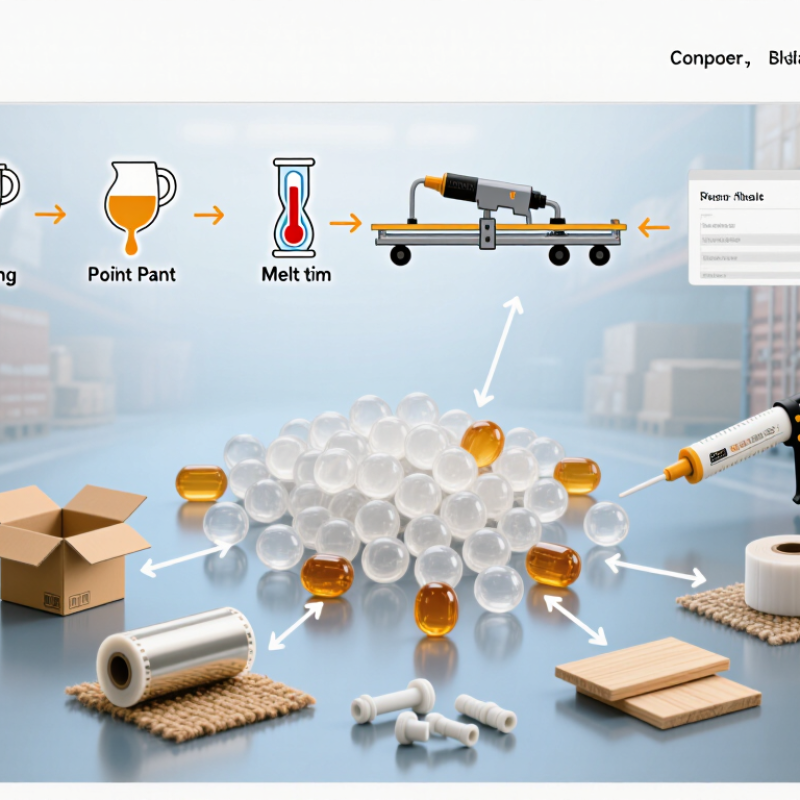
Hot glue pellets are solid thermoplastic adhesives that melt under controlled heat. They are commonly used for carton sealing, bookbinding, woodworking, edge banding, and product assembly. Some formulations suit porous surfaces, while others bond plastics, coated paper, or textiles more effectively. The right choice depends on the material, production speed, and required bond strength.

A practical buyer should check melting temperature, viscosity, open time, and setting speed. Low-viscosity pellets spread easily across uneven surfaces. High-viscosity grades can fill small gaps and improve positioning. Fast-setting formulas support high-speed packaging lines. Slower formulas allow more adjustment during manual assembly. Always test the adhesive on the actual substrate. Laboratory results may not match factory conditions.

Pellet size also affects feeding stability and melting consistency. Uniform pellets reduce blockages in tanks and automatic applicators. For global sourcing, request technical data, safety documents, batch records, and sample quantities. Confirm moisture-resistant packaging, especially for humid shipping routes. A supplier should explain storage limits and production tolerances clearly. During evaluation, record temperature settings, bond failure, odor, and application time. Small details matter. A perfect pellet does not exist; a suitable one depends on the process. I have seen teams choose lower prices, then lose time correcting poor flow or weak adhesion. That mistake is easy to repeat.

Defining Performance Requirements for Your Sourcing Project

How to Choose Hot Glue Pellets for Global Sourcing?

Defining performance requirements should come before comparing hot glue pellet prices. Start with the materials you will bond, such as cardboard, fabric, wood, or plastic. Each surface needs different adhesion, flexibility, and heat resistance. Record the application temperature, melting time, open time, and setting speed. These figures help suppliers recommend a suitable formulation instead of offering a generic product.

Test pellets under real production conditions. A glue that works on a clean sample may fail on dusty cartons or slightly uneven surfaces. Check bond strength after cooling, during storage, and after temperature changes. Observe stringing, odor, nozzle flow, and residue. Packaging also matters. Moisture-resistant bags can protect pellet consistency during long-distance shipping. Keep test records with lot numbers and production dates. A specification can still be wrong. Review it after the first factory trial.

Tips: Ask suppliers for a technical data sheet, safety information, and representative samples. Define acceptable test ranges, not only preferred values. Include color, pellet size, packaging weight, and storage limits. If the adhesive will touch food packaging, electrical parts, or children’s products, request suitable compliance documents for the destination market. Do not rely on a single test. Run small trials on your actual equipment, because machine temperature readings may differ from the adhesive’s true melt condition.

Comparing Pellet Materials, Sizes, Colors, and Melting Ranges

Global sourcing starts with the pellet material, not the color. EVA pellets suit many packaging and woodworking applications because they offer balanced adhesion, cost, and processing stability. Polyamide pellets generally tolerate higher temperatures and demanding substrates, but they need stricter moisture control. Polyester options can provide stronger heat resistance. A 2024 MarketsandMarkets report estimates the hot melt adhesives market will grow at roughly 6% annually, increasing pressure on buyers to compare performance, not only price.

Pellet size affects feeding, melting speed, and storage density. Small pellets melt quickly but may bridge inside narrow hoppers. Larger pellets feed more steadily, though they can leave unmelted cores during short heating cycles. In practical trials, 2–6 millimeter pellets are often easier to handle. Still, equipment design matters more than a standard size. Ask suppliers for bulk density, particle distribution, and dust levels. Dust is easy to overlook.

Color should support inspection. Clear or amber pellets help reveal contamination, while colored pellets can separate production grades visually. The melting range needs careful interpretation. EVA grades commonly melt near 80–120°C, while polyamide grades may require approximately 130–180°C. These are not application temperatures. ASTM D3418 and ISO 11357 methods use DSC testing to identify thermal transitions. Request the test curve, viscosity data, open time, and softening point. One procurement mistake is trusting a single melting number. Pellets can look acceptable in a sample cup, then feed poorly on a continuous line. Small pilot batches expose that gap.

Evaluating Suppliers, Quality Standards, Packaging, and Lead Times

Choosing hot glue pellets for global sourcing requires more than comparing price per kilogram. Start with supplier evidence: ISO 9001 certification, batch traceability, technical datasheets, and recent test records. The ISO Survey 2022 counted 1,265,216 ISO 9001 certificates worldwide, yet certification alone cannot prove adhesive consistency. Ask for melt viscosity, softening point, open time, color, moisture, and bonding results. Request samples from three production lots, not one polished sample. That small test often exposes variation.

Quality standards must match the application. Use recognized methods, such as ASTM D3236 for melt viscosity and ASTM E28 for softening point. Define acceptance limits in the purchase specification. Packaging deserves equal attention. Pellets should arrive in sealed, moisture-resistant bags, with lot numbers, net weight, production date, and storage instructions. A crushed carton can create contamination and feeding problems. I would test a full shipping case, not only laboratory sachets. The weak point is often handling.

Lead time needs a written calendar. Separate production time, inspection, port handling, customs clearance, and inland delivery. UNCTAD’s Review of Maritime Transport 2023 states that ships carry over 80% of global merchandise trade, so port disruption can quickly change delivery promises. Request normal lead time, peak-season lead time, and a recovery plan. Keep safety stock based on consumption data. It is not perfect. Forecasts fail. Review supplier performance monthly using defect rate, on-time delivery, claim response, and packaging damage. A low quote may become expensive when one delayed container stops production.

How to Choose Hot Glue Pellets for Global Sourcing? - Evaluating Suppliers, Quality Standards, Packaging, and Lead Times

Evaluation Area Data Dimension Typical Industry Range or Requirement Recommended Verification Method Global Sourcing Implication
Supplier Capability Production consistency Batch-to-batch variation should be controlled for viscosity, softening point, color, and open time. Request three consecutive batch test reports and compare results against the approved specification. Consistent production reduces line adjustments, rejected shipments, and performance differences between purchase orders.
Supplier Capability Technical documentation Supplier should provide a technical data sheet, safety data sheet, certificate of analysis, and storage instructions. Check that documents identify test conditions, revision dates, product form, and applicable regulatory information. Complete documentation supports customs clearance, workplace safety reviews, and customer qualification.
Supplier Capability Quality management Prefer documented incoming-material inspection, process controls, final inspection, and traceability by lot. Review the quality plan, sample inspection records, corrective-action process, and lot coding system. Traceable lots make it easier to isolate nonconforming material during international distribution.
Material Selection EVA hot melt pellets Typical softening range: approximately 80–120°C; common application range: approximately 120–180°C. Confirm viscosity at the intended application temperature, open time, set speed, and substrate compatibility. Suitable for many packaging, woodworking, assembly, and general bonding applications, but performance depends strongly on formulation.
Material Selection Polyamide hot melt pellets Typical application range: approximately 180–220°C, with higher temperature resistance than many EVA grades. Test heat resistance, flexibility, chemical resistance, and adhesion after thermal aging. Higher processing temperatures can increase energy use and may require heat-resistant application equipment.
Material Selection Reactive polyurethane hot melt pellets Often processed at approximately 100–140°C and reacts with moisture after application. Verify moisture sensitivity, open time, final cure profile, storage life, and packaging integrity. Requires stricter moisture control and may have shorter storage limits than non-reactive hot melt formulations.
Quality Standards Viscosity Common hot melt viscosity values may range from about 1,000 to 20,000 mPa·s, depending on chemistry and test temperature. Measure using a suitable hot melt viscosity method, such as ASTM D3236, at a stated temperature and shear condition. Viscosity must be matched to nozzle size, pump design, coating speed, and application temperature.
Quality Standards Softening point Specify a target value and tolerance rather than relying only on a product name or grade description. Use an agreed softening-point method and test multiple samples from each production lot. A stable softening point helps maintain predictable melting behavior during transport and production.
Quality Standards Heat stability Adhesive should resist excessive darkening, gelling, skin formation, and viscosity drift during the defined pot-life test. Conduct a controlled heated-reservoir test; ASTM D4498 may be used where appropriate for hot-melt heat stability. Important for long production runs, especially when adhesive remains heated for several hours.
Quality Standards Bond performance Acceptance limits should be defined by substrate, bond temperature, pressure, cooling time, and environmental exposure. Test peel, tensile, shear, and failure mode on the actual production substrates rather than on a generic coupon only. Laboratory strength alone does not guarantee performance on coated cartons, plastics, textiles, or painted surfaces.
Quality Standards Color and appearance Specify color, pellet size, allowable fines, foreign matter, odor, and visual uniformity. Use retained samples, visual standards, sieve checks, and lot-based inspection records. Appearance control is especially important for visible bonds and automated feeding systems.
Packaging Standard pack formats Common commercial formats include 20–25 kg moisture-resistant bags, lined cartons, or sealed plastic containers. Confirm net weight tolerance, inner liner material, sealing method, pallet pattern, and label durability. Pack format affects handling cost, warehouse efficiency, and the risk of damage during multimodal transport.
Packaging Moisture protection Moisture-barrier packaging is essential for moisture-sensitive formulations, particularly reactive polyurethane products. Check package leak testing, humidity exposure controls, desiccant use where applicable, and resealing instructions. Damaged or partially opened packaging can cause premature reaction, foaming, or application defects.
Packaging Lot identification Each bag, carton, or pallet should show lot number, production date, net weight, storage conditions, and product code. Compare physical labels with the certificate of analysis and shipping documents before release. Clear labeling improves warehouse rotation, recall control, and customs documentation accuracy.
Storage Recommended warehouse conditions Store in a cool, dry, covered area away from direct sunlight and heat sources; follow the supplier’s stated temperature limits. Monitor warehouse temperature and humidity and apply first-in, first-out inventory control. Improper storage can change pellet flow, create clumping, shorten shelf life, or damage packaging.
Lead Time Sample development Typical range: approximately 1–3 weeks when an existing formulation is available; custom development may take longer. Obtain a written sample schedule covering formulation confirmation, laboratory testing, and dispatch. Early sampling is necessary when bonding trials, regulatory reviews, or customer approvals are required.
Lead Time Standard production Typical range: approximately 2–6 weeks after specification and order confirmation, excluding international transit. Request the production slot, capacity confirmation, planned batch date, and certificate-of-analysis release date. Lead time should be evaluated together with transport duration, customs clearance, and safety-stock requirements.
Lead Time Custom formulation Typical range: approximately 6–12 weeks or more, depending on raw-material availability, testing, and approval cycles. Use a stage-gate plan with milestones for formulation, pilot batch, validation, approval, and scale-up. Custom grades require stronger forecast visibility and should not be sourced without an agreed change-control process.
Logistics International transit planning Allow additional time for booking, port handling, customs clearance, inspection, and inland delivery. Compare planned transit time with historical lane performance and define responsibility for shipping documents. Use a buffer for seasonal congestion, holidays, severe weather, and route disruption.
Commercial Review Total landed cost Evaluate material price, packaging, testing, freight, insurance, duties, customs fees, warehousing, and rejected-material risk. Build a landed-cost model using the same delivery terms, shipment quantity, currency, and forecast volume. The lowest quoted pellet price may not provide the lowest total cost after logistics and quality expenses are included.
Commercial Review Change notification Supplier should notify the buyer before changes to raw materials, formulation, manufacturing location, process, or packaging. Include written change-control and requalification requirements in the purchasing agreement. Change notification protects validated application settings and prevents unexpected bond-performance shifts.
Final Qualification Production-line trial Run a controlled trial at the actual operating speed, nozzle temperature, substrate combination, and cooling conditions. Record melt behavior, application stability, set time, bond strength, waste rate, odor, and operator feedback. Final approval should be based on production performance, not only on laboratory data or a supplier sample.

Calculating Total Costs and Selecting the Best Global Supply Option

How to Choose Hot Glue Pellets for Global Sourcing?

A low pellet price can hide expensive supply risks. Calculate total landed cost, not only the quotation. Include pellet cost, export packing, inland pickup, ocean or air freight, insurance, duties, customs fees, testing, and warehouse handling. Add financing for inventory held during transit. UNCTAD’s Review of Maritime Transport 2023 reports that over 80% of global trade by volume moves by sea, so port delays can materially affect cash flow.

Compare suppliers using the same annual demand and delivery terms. Record minimum order quantity, lead time, payment conditions, and currency exposure. The World Bank Logistics Performance Index 2023 evaluates customs, infrastructure, shipment reliability, and timeliness. These factors can influence the real cost of hot glue pellets. A cheaper source may require larger safety stock or emergency air shipments. That is not a saving.

Technical consistency matters too. Request recent technical data sheets, safety data sheets, melt viscosity results, softening point, open time, and application temperature. Ask for batch samples before signing a long contract. In practice, one inconsistent batch can create nozzle blockage, weak bonding, or production waste. I would also compare two sourcing routes, not one. My first calculation is rarely perfect; exchange rates, seasonal freight, and overlooked inspection charges can change the result. Keep a visible contingency allowance. It may feel conservative. It is often realistic.

Sources: UNCTAD, Review of Maritime Transport 2023; World Bank, Logistics Performance Index 2023.