Top Hot Melt Adhesive Pellets Uses Benefits and Applications?
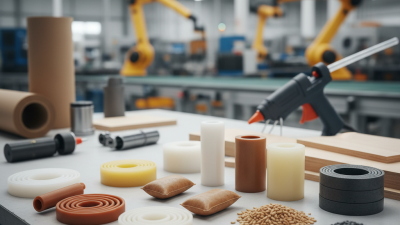
Hot Melt Adhesive Pellets have revolutionized numerous industries due to their versatility and effectiveness. These pellets are used in various applications, from packaging to automotive manufacturing. Their high performance and ease of use make them indispensable.
The unique properties of Hot Melt Adhesive Pellets allow them to bond quickly and securely. They provide strong adhesion on many surfaces, which is crucial in production processes. However, some users may overlook the importance of selecting the right formulation for specific tasks, which can lead to inconsistent results.
Moreover, the environmental impact of Hot Melt Adhesive Pellets is a topic worth exploring. While they offer many benefits, the production and disposal methods can raise questions. Understanding these aspects contributes to informed decision-making in adhesive applications. Recognizing both advantages and limitations can enhance the effectiveness of these materials in real-world scenarios.

Understanding Hot Melt Adhesive Pellets: Definition and Composition
Hot melt adhesive pellets are versatile materials used in various industries. They consist mainly of thermoplastic polymers, which give them unique bonding properties. The composition typically includes polymers like ethylene-vinyl acetate (EVA) and polyamide, known for their strong adhesion and quick drying times. According to recent market research, the global hot melt adhesive market is expected to reach 9 billion USD by 2025, indicating a growing demand.
These pellets are widely used in packaging, woodworking, automotive, and textile applications. They provide immediate bonding, which enhances operational efficiency. In woodworking, hot melt adhesives help to bond panels and laminates seamlessly. Their high-performance characteristics make them suitable for demanding conditions, particularly where temperature resistance is crucial.
Tip: Always consider the working temperature of the adhesive. Each application may require specific temperature ranges for optimal adhesion.
Hot melt adhesive pellets can sometimes be challenging to store and handle. They may degrade if exposed to moisture or extreme temperatures. Understanding their specific requirements is essential for maintaining their performance over time. The pellets can become brittle if stored improperly, affecting their bonding strength.
Tip: Keep the adhesive pellets in a controlled environment to prolong their shelf life.
Top Hot Melt Adhesive Pellets Uses, Benefits, and Applications
| Application |
Use Case |
Benefits |
| Packaging |
Sealing boxes and cartons |
Fast setting, strong bond, lightweight |
| Automotive |
Interior trim and upholstery |
Good thermal stability, flexibility |
| Furniture |
Assembly of wooden parts |
Quick curing, enhanced appearance |
| Electronics |
Bonding of components in devices |
Electrical insulation, heat resistance |
| Textiles |
Fabric lamination |
Flexible, water-resistant |
Key Benefits of Using Hot Melt Adhesive Pellets in Various Industries
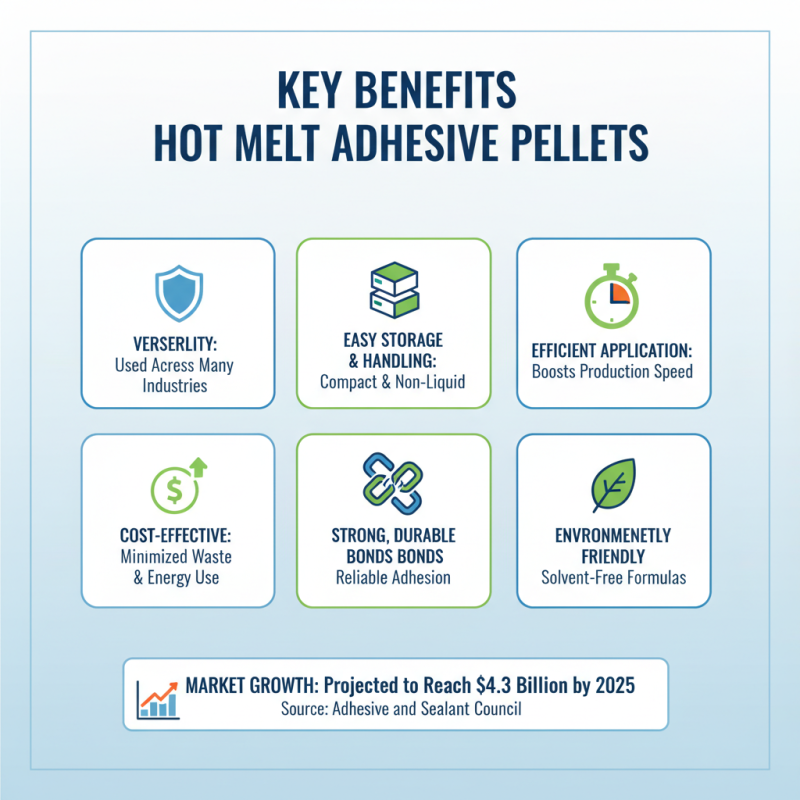
Hot melt adhesive pellets have become essential in many industries. They offer numerous advantages that make them a preferred choice for manufacturers. These pellets are easy to store and handle, providing efficient application methods that enhance production speed. Research from the Adhesive and Sealant Council indicates that the hot melt adhesive market is projected to reach $4.3 billion by 2025, showcasing their increasing importance in various sectors.
One of the key benefits of using hot melt adhesive pellets lies in their quick bonding capabilities. They bond to a wide range of substrates, which is crucial for industries like packaging and automotive. In fact, a recent report noted that the automotive segment alone accounts for approximately 22% of the global hot melt adhesives market. This versatility can be a double-edged sword. While it allows for creative applications, it also necessitates careful selection to ensure compatibility.
Another significant advantage is their environmental friendliness. Many hot melt adhesives are solvent-free and reduce volatile organic compounds (VOCs) in the manufacturing process. However, this eco-friendly aspect can sometimes lead to performance trade-offs. Some pellets may lack the same structural integrity as traditional adhesives. Thus, careful consideration is required when choosing a suitable adhesive for specific applications.
Common Applications of Hot Melt Adhesive Pellets in Manufacturing
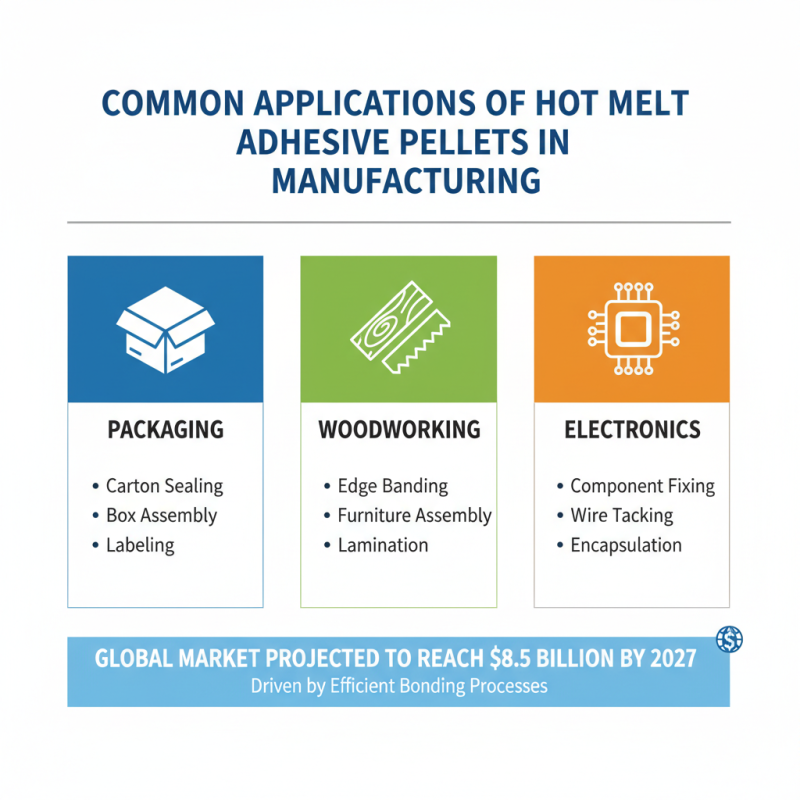
Hot melt adhesive pellets are increasingly popular in various manufacturing sectors. These versatile adhesives provide excellent bonding solutions in packaging, woodworking, and electronics. According to a recent industry report, the global hot melt adhesive market is projected to reach $8.5 billion by 2027, driven by increasing demand for efficient bonding processes.
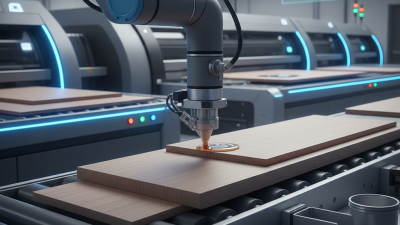
In packaging, hot melt adhesives excel in carton sealing and label application. Their fast-setting nature improves production speed. A study highlights that 80% of packaging manufacturers prefer these adhesives for their strong, durable bonds. In woodworking, they are essential for assembling furniture and cabinetry. Their ability to bond dissimilar materials allows for creative designs and structural integrity. Recent data shows a 15% growth in the use of hot melt adhesives in woodworking applications over the past three years.
However, challenges remain. While hot melt adhesives provide robust bonds, they can be sensitive to temperature changes. In cold conditions, adhesion strength may diminish. This variable performance necessitates careful selection and testing for specific applications. Users must consider environmental factors to maximize adhesive effectiveness. Proper training for operators in managing these adhesives is also essential to avoid application errors that could lead to product failures.
Innovative Uses of Hot Melt Adhesive Pellets in Crafting and DIY Projects
Hot melt adhesive pellets are transforming the crafting landscape. These versatile materials offer unique properties that enhance creative projects. They melt quickly, making them ideal for use with glue guns. The fast-setting nature allows for quick assembly, perfect for DIY enthusiasts.
In crafting, these pellets are used for various applications. They bond materials like wood, fabric, and paper effectively. You can create stunning crafts effortlessly. However, control is essential. Overuse can lead to messy projects, and improper techniques can result in weak bonds. It’s crucial to experiment with different temperatures for optimal results.
These adhesives are also great for mixed-media art. They add dimension and texture to projects. Crafters can create layers using various materials. However, finding the right balance can be challenging. Too much adhesive can overpower delicate elements. It’s a learning process that can lead to innovative discoveries, making each crafting experience unique.
Factors to Consider When Choosing Hot Melt Adhesive Pellets for Your Needs
When selecting hot melt adhesive pellets, several factors come into play. The type of material you are bonding is crucial. If you are working with porous surfaces, an adhesive with a greater ability to penetrate is ideal. Conversely, non-porous materials require a different adhesive composition. It’s essential to match the adhesive to the substrates to achieve optimal adhesion.
Temperature resistance is another critical factor. Some applications expose the adhesive to varying temperatures. For instance, packaging can experience shifts in heat, impacting adhesion efficacy. Pellets designed for high-temperature applications typically contain special polymers that retain strength despite thermal fluctuations. You should evaluate the environmental conditions your product will face.
Finally, consider the application method. Hot melt adhesive pellets can be used in various ways, including extrusion and spraying. The method affects the viscosity and performance of the adhesive. Take time to test different application techniques. Understanding these variables can be challenging, but it is vital for successful bonding. It’s okay to experiment before settling on the most effective solution.
 +86-15666836565

 CONTACT NUMBER