What is Hot Melt Adhesive Powder and its Uses?
Hot Melt Adhesive Powder is a versatile bonding material used in various industries. According to Dr. Sarah Thompson, an expert in adhesive technologies, "This powder provides strong adhesion with excellent durability." It has gained popularity due to its ease of application and performance.
In the packaging industry, Hot Melt Adhesive Powder is crucial for ensuring secure seals and joints. Its quick-setting nature makes it ideal for high-speed production lines. Additionally, it is commonly used in textiles, woodworking, and electronics.
However, not all applications are straightforward. The effectiveness of Hot Melt Adhesive Powder can be influenced by surface conditions and temperature variations. Users must carefully assess their specific needs. There is always room for improvement and innovation in this field, as new formulations continue to emerge. Balancing cost and performance remains a challenging task for manufacturers.
What is Hot Melt Adhesive Powder?
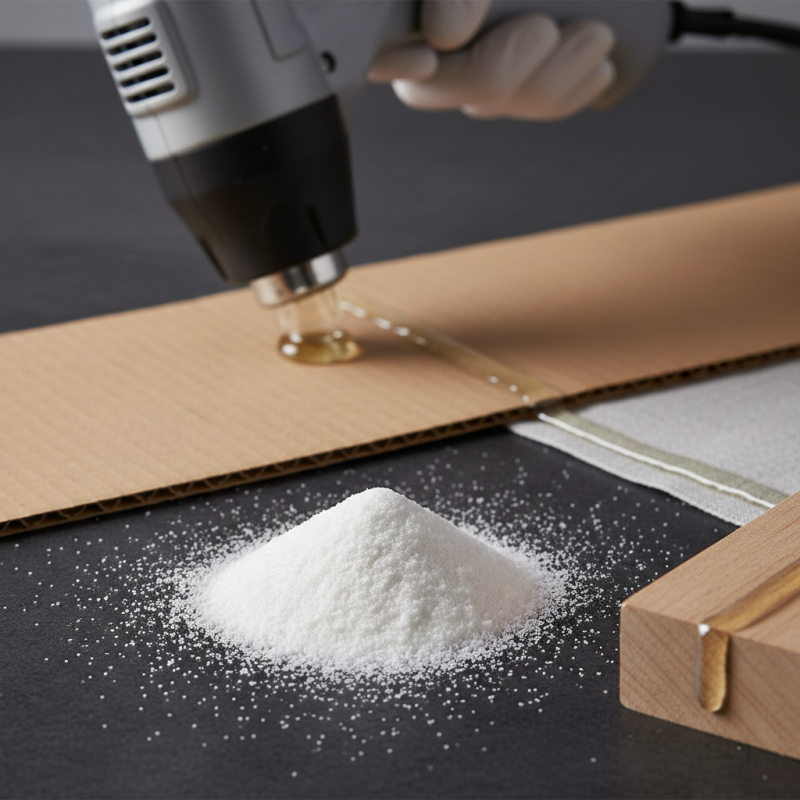
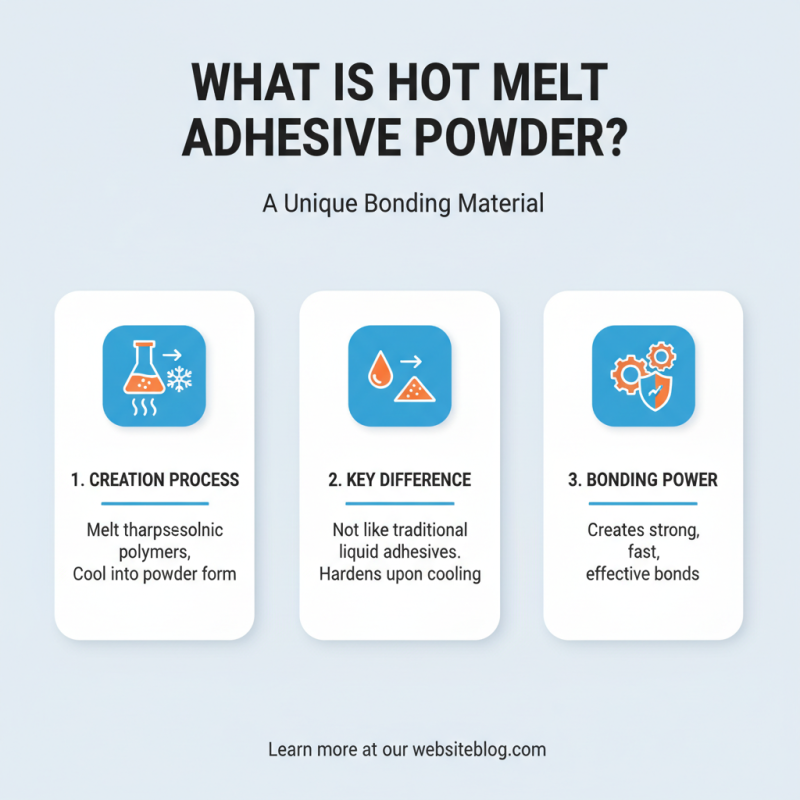
Hot melt adhesive powder is a unique bonding material. It is created through a process of melting thermoplastic polymers and cooling them down into powder form. This type of adhesive is different from traditional liquid adhesives. It efficiently hardens upon cooling, creating strong bonds quickly and effectively.
The primary feature of hot melt adhesive powder is its versatility. It can be used in various industries, including packaging, textiles, and woodworking. This adhesive is particularly valued in product assembly. Using it means less messy application compared to liquids. The powder form allows for precise application, which is crucial for intricate tasks.
However, working with hot melt adhesive powder can present challenges. For instance, improper heating can lead to poor adhesion. There’s also the risk of uneven distribution when applying the powder. Ensuring optimal conditions is essential for achieving the best results. Users may need to experiment to find the right settings for their specific applications. Understanding these nuances can help improve overall performance.
Composition and Properties of Hot Melt Adhesive Powder
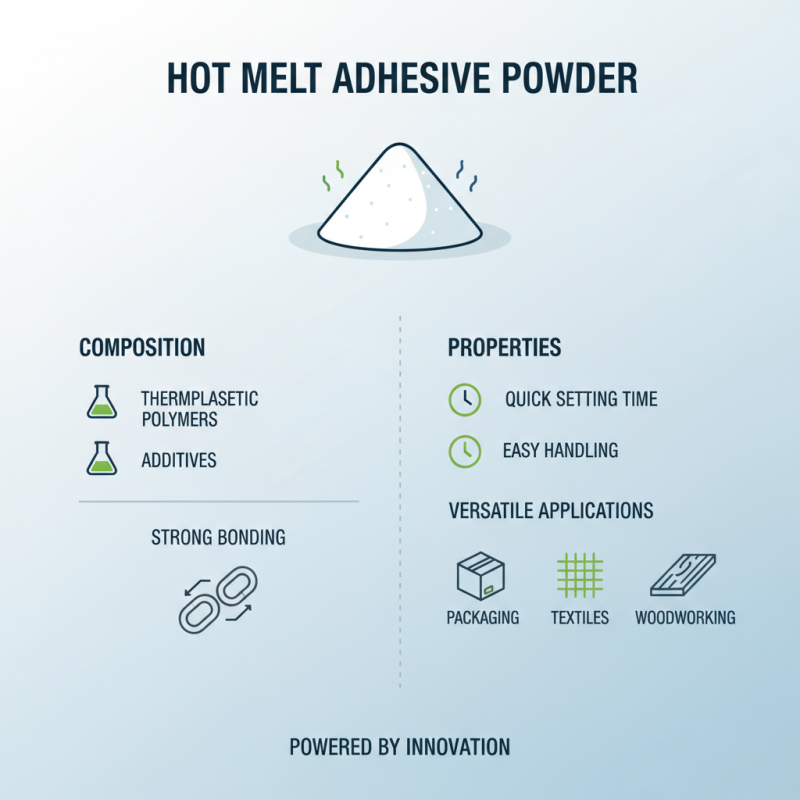
Hot melt adhesive powder is a versatile material used in various applications. Its composition primarily includes thermoplastic polymers and additives. These ingredients contribute to its strong bonding capabilities and quick setting time. The powder form allows for easy handling and application. It is often used in packaging, textiles, and woodworking industries.
The properties of hot melt adhesive powder make it ideal for many uses. It exhibits excellent adhesion to different substrates, including plastics, wood, and metals. Its ability to melt and solidify quickly ensures efficient production processes. However, the choice of the right powder can be challenging. Different applications require specific properties, such as flexibility or heat resistance. Users need to carefully assess their needs before making selections.
In practice, hot melt adhesives may underperform in high-temperature environments. They can soften or lose adhesion if exposed to heat. Users may find that not all powders meet every requirement perfectly. Therefore, trial and error can be part of the process. Understanding the limitations and advantages is crucial for effective use.
Key Applications of Hot Melt Adhesive Powder in Various Industries
Hot melt adhesive powder (HMAP) is a thermoplastic material widely utilized across various industries. Its versatile properties make it ideal for bonding different substrates. In packaging, for instance, HMAP provides strong adhesion for paper, plastic, and cardboard. This is crucial as billions of packages are shipped globally every year. According to a recent report by Smithers Pira, the global hot melt adhesives market is expected to reach $10.2 billion by 2027.
In the textile industry, hot melt adhesive powder is used for garment manufacturing. It allows for quick bonding, which speeds up production times. Many manufacturers prefer HMAP because it creates a seamless finish. However, the industry faces a challenge: ensuring that adhesives can withstand high temperatures without losing effectiveness. Bond failure is a concern in high-performance applications.
Moreover, the automotive sector employs hot melt adhesives for lightweight components. Creating a strong bond contributes to vehicle efficiency. Manufacturers reported that using HMAP can improve overall durability by 25%. On the flip side, achieving this performance often requires extensive testing and optimization. Without it, the reliability of bonded joints may decrease, which could lead to safety issues down the line.
Advantages of Using Hot Melt Adhesive Powder Over Other Adhesives
Hot melt adhesive powder offers unique benefits that distinguish it from conventional adhesives. This powder is easy to apply and melts quickly, forming a strong bond when cooled. It works well on various materials, such as wood, plastics, and textiles. Users appreciate its versatility and effectiveness in different applications, from crafting to industrial use.
One significant advantage is its rapid setting time. Unlike liquid adhesives that can take hours to cure, hot melt adhesive powder bonds almost instantly. This characteristic improves workflow, particularly in busy production settings. Another plus is its resistance to moisture and heat. This durability ensures that items remain secure even in challenging environments.
However, it is essential to consider the application process. Users must apply heat to activate the adhesive. This step can be tricky, especially for beginners. If the heat is uneven, the bond might be weak. Moreover, using too much powder can lead to a messy application. Some users find this a challenging aspect, requiring practice to perfect. Nonetheless, the advantages often outweigh these hurdles. With experience, it becomes easier to handle.
Market Trends and Growth Forecast for Hot Melt Adhesive Powder
Hot melt adhesive powder is gaining popularity across various industries. Its unique properties make it an ideal choice for diverse applications. As manufacturers seek efficient bonding solutions, the demand for these adhesives continues to grow. This trend reflects a broader movement towards more sustainable materials.
One major trend is the increase in eco-friendly formulations. Many companies are looking for greener alternatives. Hot melt adhesive powder offers a way to bond materials without harmful solvents. This appeal resonates well in markets focused on sustainability. Additionally, advancements in technology enhance product performance. These innovations may lead to improved adhesion and faster curing times.
The growth forecast for hot melt adhesive powder appears promising. Experts estimate significant market expansion in the coming years. This growth stems from rising demand in packaging, textiles, and automotive sectors. However, some challenges remain. The need for continuous improvement and innovation is essential. Balancing costs while maintaining quality can be difficult for manufacturers.
What is Hot Melt Adhesive Powder and its Uses? - Market Trends and Growth Forecast for Hot Melt Adhesive Powder
| Application Area |
Adhesive Properties |
Market Share (%) |
Growth Forecast (2023-2028) |
| Packaging |
High adhesion, quick setting |
25% |
5% CAGR |
| Automotive |
Temperature resistant, flexible |
20% |
6% CAGR |
| Textiles |
Soft touch, high durability |
15% |
4% CAGR |
| Construction |
Strong bond, moisture resistant |
30% |
7% CAGR |
| Furniture |
Fast curing, clean application |
10% |
5% CAGR |
 +86-15666836565

 CONTACT NUMBER