+86-15666836565


Phenolic Resin Adhesive plays a crucial role in various industries, from construction to automotive. According to recent market research, the global phenolic resin adhesive market is projected to reach USD 2.4 billion by 2026, growing at a CAGR of 5.2%. This growth is driven by their strong bonding properties and resistance to heat.
Several brands stand out in China, where the adhesive market is highly competitive. Companies focus on quality, innovation, and eco-friendliness. While many brands attempt to meet rising demands, not all achieve the same level of reliability. Reports indicate that a significant percentage of consumers prioritize brands with a proven track record.
Recognizing trusted brands is essential for businesses looking to ensure product performance. Phenolic resin adhesives must meet stringent industry standards. However, some manufacturers still grapple with quality consistency. Understanding the best brands can save time, resources, and potential project failures.

Phenolic resin adhesives play a crucial role in various industries in China. These adhesives are known for their excellent heat resistance and adhesion properties. Manufacturers utilize them in applications like woodworking, packaging, and construction. This versatility makes phenolic resins a popular choice.
In China, the market for phenolic resin adhesives is growing rapidly. Many companies aim to improve their production techniques. This rising competition may lead to innovations. However, the quality of these adhesives can vary significantly. Some producers cut corners to save costs, which can affect performance and safety.
Despite the advancements, challenges exist. Environmental regulations are tightening, pushing companies to adopt greener practices. Some firms struggle to meet these standards while maintaining quality. This balance is critical for long-term success. Industry experts urge continual improvement and rigorous testing for reliable products.

Phenolic resin adhesives are renowned for their exceptional bonding strength and heat resistance. These adhesives consist of phenol and formaldehyde, which chemically combine to create a durable material. They play a crucial role in various industries, including automotive, aerospace, and construction. Their unique properties make them suitable for applications like bonding wood products, laminates, and high-stress components.
Tips: When selecting phenolic resin adhesives, consider the intended application. Different formulations cater to specific needs. Test the adhesive on sample materials to evaluate compatibility.
One key feature of phenolic resin adhesives is their excellent resistance to chemicals and moisture. This makes them ideal for outdoor applications, where durability is essential. They can withstand harsh environmental conditions without losing their bonding power. However, curing times can vary, and improper curing may lead to weaker joints.
Tips: Always read the instructions for curing times and conditions. Proper application is critical for optimal performance. Be aware that environmental factors can influence curing.
| Brand | Key Features | Applications |
|---|---|---|
| Brand 1 | High thermal resistance, excellent bonding strength | Woodworking, automotive components |
| Brand 2 | Water-resistant, fast curing time | Construction, furniture assembly |
| Brand 3 | Flexible, low viscosity | Textile bonding, paper production |
| Brand 4 | High impact resistance, UV stabilizing | Electrical appliances, automotive interiors |
| Brand 5 | Non-toxic, bio-based options available | Consumer goods, eco-friendly furniture |
| Brand 6 | Superior aging resistance, easy application | Packaging, construction materials |
| Brand 7 | Excellent adhesion to plastics and metals | Automotive parts, electronic devices |
| Brand 8 | High strength-to-weight ratio, fire resistance | Aerospace, defense applications |
| Brand 9 | Long pot life, versatile application | Marine, industrial manufacturing |
| Brand 10 | Thermal and chemical stability | Pharmaceuticals, chemical containers |
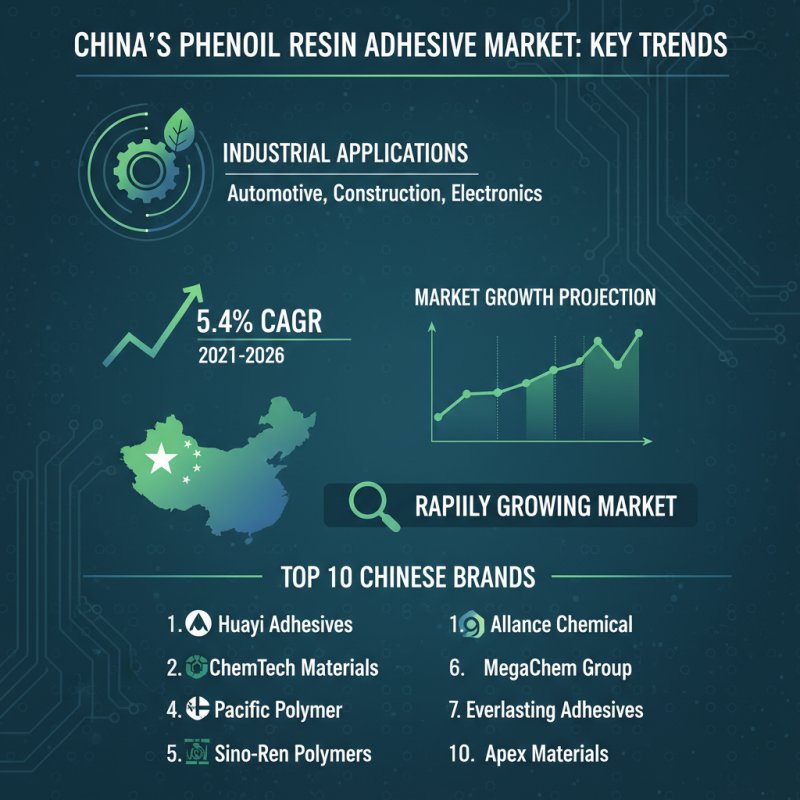
Phenolic resin adhesives are key players in various industrial applications. China is home to a rapidly growing market for these adhesives. According to recent industry reports, the demand for phenolic resin adhesives is projected to expand significantly over the next few years. One report estimates a compound annual growth rate (CAGR) of around 5.4% from 2021 to 2026. This growth reflects the increasing use of these adhesives in automotive, construction, and electronics sectors.
Several brands dominate this market, showcasing diverse formulations and applications. Key features of phenolic resins include heat resistance, strong bonding capabilities, and excellent moisture resistance. However, some users have noted inconsistencies in performance depending on the application conditions. Environmental factors, such as humidity and temperature, can affect adhesive effectiveness. Manufacturers are continuously working to refine their products to overcome these challenges.
The competitive landscape is robust, with companies investing in research and development. Innovations are aimed at improving adhesive performance while also addressing sustainability concerns. Trends indicate a shift towards eco-friendly formulations, which presents both opportunities and hurdles. As the industry matures, companies must adapt to regulatory changes and consumer preferences. Understanding these dynamics is crucial for stakeholders looking to navigate the evolving market successfully.
Phenolic resin adhesives are gaining traction in various industries. Their strength and durability make them popular choices for manufacturers. This rise stems from advancements in production processes and materials. These innovations help meet stringent environmental standards while enhancing performance.
Market trends indicate a shift toward eco-friendly formulations. Manufacturers seek to reduce harmful emissions during application. This evolution reflects a growing awareness of sustainability. Furthermore, customization options are expanding, allowing businesses to tailor adhesives for specific needs. This adaptability promotes efficiency across diverse applications.
Despite these developments, challenges remain. Some formulations still struggle with water resistance. Others may have a longer curing time, affecting production schedules. Continuous research is necessary to address these deficiencies. Industry collaboration is vital in creating solutions that benefit all stakeholders. The future of phenolic resin adhesives looks promising, but ongoing improvement is essential.
This bar chart illustrates the market share percentage, growth rate, and innovation index of phenolic resin adhesives. The data reflects the current trends and potential of the industry, highlighting its significance in the adhesive market.
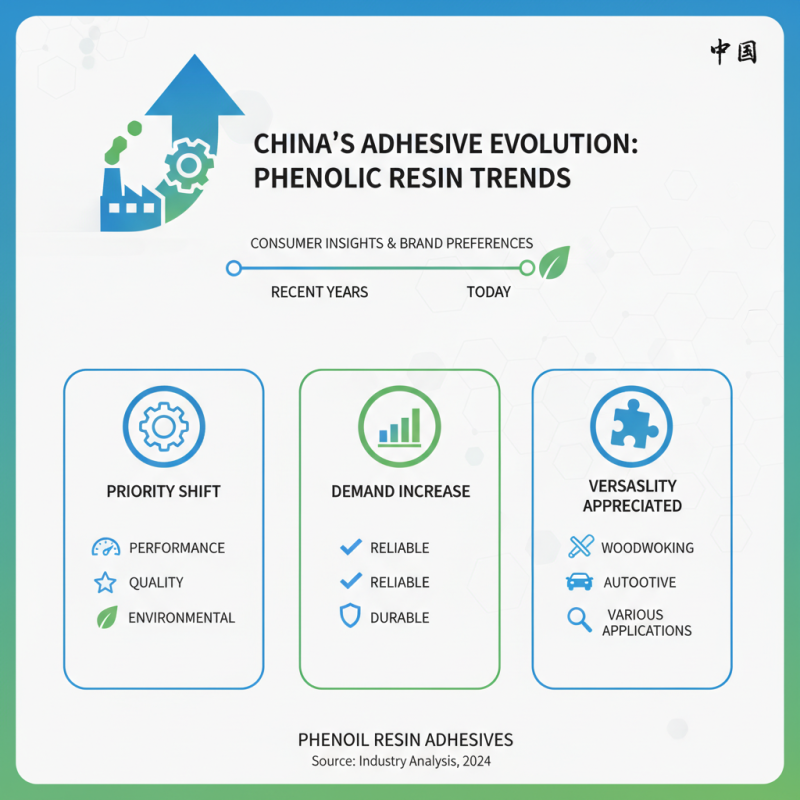
In recent years, consumer preferences in China for phenolic resin adhesives have evolved significantly. Buyers now prioritize performance, quality, and environmental considerations when choosing products. This shift is evident in the increasing demand for reliable and durable adhesives. Many consumers appreciate the versatility of these adhesives, which are used in various applications from woodworking to automotive industries.
Research indicates that customers are more inclined to trust brands with strong environmental credentials. Transparency about sourcing and manufacturing processes also plays a crucial role in gaining consumer trust. Nonetheless, some brands often struggle to communicate their sustainability practices effectively. This gap leaves consumers seeking more information. It reflects a broader trend where buyers desire transparency.
Moreover, consumers express concerns about pricing versus performance. High-quality adhesives often come with a premium price tag, which can deter budget-conscious buyers. Many express a willingness to pay more for reliability, yet they are not always ready for the investment. Understanding these nuances is essential for brands aiming to capture market share in a rapidly changing landscape.