How to Use Water Soluble Glue for Effective Bonding?
Water Soluble Glue is a versatile bonding solution used in various industries. According to Dr. Emily Harris, an expert in adhesive technology, “Effective bonding with water soluble glue requires an understanding of its properties.” This statement highlights the importance of knowing how to use this adhesive properly.
Water Soluble Glue can bond materials efficiently but has its limitations. It may not work well on non-porous surfaces. Users often encounter challenges when trying to achieve optimal adhesion. For example, applying too much glue can lead to messy results.
Success with Water Soluble Glue comes from experimentation and adjustments. Each project may demand different techniques. Not every attempt will yield perfect results, but learning from mistakes is crucial. Understanding the right application methods can make a significant difference in bonding effectiveness.
Understanding Water Soluble Glue: Composition and Properties
Water soluble glue is an essential tool for many crafting and woodworking projects. Understanding its composition helps us appreciate its unique properties. This glue is primarily based on natural polymers and water. It can easily dissolve in water, which allows for smooth application and cleanup. The adhesive properties develop as it dries, forming a strong bond with various materials.
When using water soluble glue, consider the environment. Humidity can impact the drying time and effectiveness. Ensure surfaces are clean and dry before applying the glue. The bond may not hold as expected if there are dirt or grease residues. Remember that water soluble glue is not waterproof. It may weaken when exposed to moisture after curing.
Experimentation can lead to surprising results. Sometimes the bond may not be as strong as desired. It may lift or peel under pressure. Reflect on specific conditions affecting performance. A little trial and error can help you master its use. Adjusting application techniques can improve outcomes significantly. Finding the right balance takes time and patience.
Water Soluble Glue Usage in Different Applications
This chart shows the percentage of water soluble glue usage across various applications, illustrating its versatility and effectiveness in bonding materials.
Types of Water Soluble Glue and Their Ideal Applications
Water soluble glue is versatile and easy to use. It comes in different types, each suited for various applications. For paper and light cardboard, a simple white glue works well. It dries clear and provides a strong bond. You can use it for crafts or school projects. The thick consistency makes it easier to control during application.
For fabric bonding, a specialty water soluble glue designed for textiles is ideal. This type dries flexible, allowing the fabric to move naturally. It is great for sewing projects where you want a temporary hold before final stitching. However, you must ensure it matches the fabric types, or the bond may weaken unexpectedly.
Another option is the starch-based glue. It’s biodegradable and safe for children. This glue works best for lightweight materials and paper mache. While it’s easy to apply, it can be messy. Make sure to clean up any excess quickly. Test a small area first, as the final bond strength may vary. Using the right type of glue is crucial, as improper selection can lead to disappointing results.
Steps for Preparing Surfaces Before Bonding with Water Soluble Glue
When working with water soluble glue, proper surface preparation is crucial. Begin by cleaning the surfaces to remove dirt, dust, and grease. A study by the Adhesive Bonding Institute indicates that over 70% of adhesive failures occur due to inadequate surface cleaning. Use a damp cloth or mild detergent to wipe surfaces thoroughly. Rinse with clean water to prevent residue.
Next, make sure the surfaces are dry before applying the glue. Water soluble glue requires moisture to create a strong bond, yet excess water can actually weaken the adhesion. According to industry reports, the best bonding results occur at humidity levels between 50% to 70%. If the environment is too dry, consider using a spray bottle to lightly mist the surface before application.
Tips: Test the glue on a small area first. This ensures compatibility and bond strength. Keep in mind that rough surfaces can provide better adhesion but may require more glue. Observe how the glue flows; it should spread evenly without pooling. If you notice that the glue doesn’t adhere well in certain spots, it might indicate improper surface prep or irregularities in the surface material. Taking a moment to double-check these factors can save time and resources later.
How to Use Water Soluble Glue for Effective Bonding
| Step |
Description |
Importance |
| 1 |
Clean the surfaces to be bonded using water and a cloth to remove dust, grease, and other contaminants. |
Ensures better adhesion by removing barriers. |
| 2 |
Roughen the surface lightly with sandpaper if the material allows, to increase the bonding area. |
Improves mechanical grip for stronger bonds. |
| 3 |
Dry the surfaces thoroughly before applying the glue; moisture can weaken the bond. |
Prevents dilution of the adhesive, ensuring optimal performance. |
| 4 |
Apply the water soluble glue evenly on one of the surfaces using a brush or applicator. |
Ensures uniform coverage, enhancing bond strength. |
| 5 |
Press the surfaces together with even pressure and hold in place for the recommended curing time. |
Allows the glue to set properly, ensuring a strong bond. |
| 6 |
Clean any excess glue immediately with water before it dries to maintain a neat appearance. |
Prevents mess and ensures aesthetic quality. |
Techniques for Achieving Stronger Bonds Using Water Soluble Glue
Water soluble glue is a versatile adhesive used in various applications, from crafting to woodworking. To achieve stronger bonds, proper techniques play a key role. First, ensure the surfaces are clean and dry. Dust and grease can weaken the bond significantly. According to a study, over 30% of failed adhesive applications are due to inadequate surface preparation.
Another technique is to apply adequate pressure during bonding. Pressure helps ensure a uniform spread of glue, increasing the bond's strength. In fact, experts suggest maintaining pressure for about 30 seconds to a minute to achieve optimal results. A controlled environment, with moderate temperature and humidity, also enhances adhesion performance. If conditions are too humid or cold, the glue may not set as desired.
Letting the glue cure for the appropriate amount of time is crucial. While water soluble glue can bond quickly, full strength often requires a longer wait. Many users overlook this, leading to weak joints. In one survey, nearly 25% of users reported issues linked to insufficient curing time. Always refer to specific guidelines for each project.
Best Practices for Curing and Storing Water Soluble Adhesives
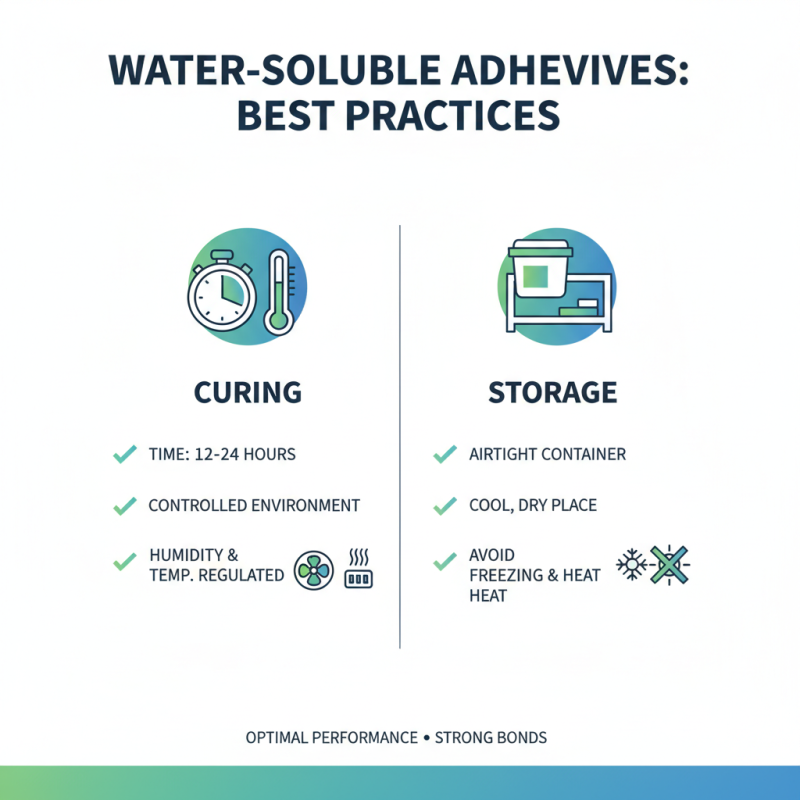
Water soluble adhesives are versatile tools in bonding projects. However, proper curing and storage practices are essential for optimal performance. One common mistake is not allowing adequate time for curing. Generally, these adhesives need 12 to 24 hours to form a strong bond. During this time, factors like humidity and temperature can influence the outcome. It’s vital to work in a controlled environment. If the conditions aren't ideal, the adhesive may not set as anticipated.
Storage also plays a crucial role. Water soluble glue should be kept in a cool, dry place away from direct sunlight. Containers must be tightly sealed to prevent moisture exposure. If left open, the adhesive can thicken or become ineffective over time. Users sometimes overlook expiration dates, thinking they can use old glue. This can lead to frustration as results vary significantly. Regular checks on the adhesive's consistency can prevent future issues. Keeping a well-maintained inventory is a good practice to ensure optimal bonding results.
 +86-15666836565

 CONTACT NUMBER