How to Effectively Use Urea Formaldehyde Glue in Your Projects?
Urea Formaldehyde Glue is a popular adhesive in various projects. Its strong bonding capabilities make it suitable for woodworking and crafts. However, using this glue requires some knowledge and care.
While Urea Formaldehyde Glue adheres well to different materials, improper use can lead to issues. For example, applying too much glue can result in a messy finish. Likewise, inadequate ventilation during curing can pose health risks. It's important to manage the application process carefully.
Understanding the properties of Urea Formaldehyde Glue enhances its effectiveness. It dries quickly, which can be a double-edged sword. You need to work swiftly, yet precisely. Learning to balance speed and accuracy takes practice. Over time, you’ll develop techniques that suit your specific projects.
Understanding Urea Formaldehyde Glue: Properties and Applications
Urea formaldehyde glue (UF glue) is widely used in various industries. It is particularly known for its strong bonding properties and fast curing times. This adhesive is a resin that reacts with water and hardeners to create a robust bond. Industry data suggests that around 40% of all wood-based panels use UF glue, particularly in plywood and particleboard production.
One important characteristic of urea formaldehyde glue is its low cost compared to other adhesives. Studies show that its use can reduce overall material costs by approximately 20%. However, while UF glue offers advantages, it also comes with drawbacks. For instance, it can emit formaldehyde, which poses health risks. The level of emissions depends on the formulation and the conditions of use, leading to a need for careful handling and consideration of ventilation.
Its applications extend to furniture manufacturing, flooring, and even automotive parts. Despite its popularity, producers must weigh the benefits against potential health impacts. Regulatory guidelines are tightening, focusing on reducing emissions. Therefore, while urea formaldehyde glue remains a staple in many processes, constant evaluation is essential for ensuring safety and compliance.
Urea Formaldehyde Glue Applications and Properties
This chart illustrates the key properties of Urea Formaldehyde Glue based on various criteria such as adhesive strength, drying time, water resistance, thermal stability, and cost-effectiveness. Each property is rated on a scale from 0 to 100, providing a clear overview of the glue's performance in different applications.
Choosing the Right Urea Formaldehyde Glue for Your Project Needs
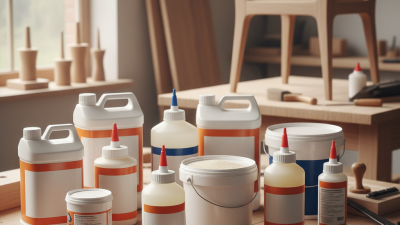
Choosing the right urea formaldehyde glue is crucial for the success of your projects. This type of adhesive is commonly used in woodworking, crafting, and construction due to its strong bonding properties. However, not all urea formaldehyde glues are the same. Evaluate the specific needs of your project to make an informed choice.
Consider the application surface. Some glues work better on porous materials, while others perform well on non-porous surfaces. Pay attention to the setting times as well. A faster-setting glue can speed up your project, but a slower-drying option allows for adjustments. Make your choice wisely.
Tips: Test your glue on small samples first. This helps you understand how it will react with your materials. Also, check the temperature and humidity levels in your workspace. These factors can affect the adhesive’s performance.
Be aware of limitations too. Urea formaldehyde glue may yellow over time. It might not be suitable for outdoor projects or high moisture areas. Explore alternatives if necessary. Always prioritize safety and proper ventilation when using adhesives.
Preparation and Safety Measures Before Using Urea Formaldehyde Glue
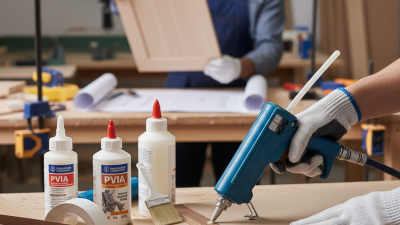
Before using urea formaldehyde glue, preparation is crucial. Ensure the workspace is well-ventilated. Open windows and use fans if needed. This glue emits fumes that can be harmful if inhaled. Have safety gear ready, including gloves and a mask. These basic precautions protect you from exposure.
It’s important to read the material safety data sheet (MSDS). Familiarize yourself with the hazards associated with urea formaldehyde. Pay attention to safe handling and storage instructions. Incorrect use can lead to health issues or damage to your project. Additionally, keep a first-aid kit nearby. Accidents can happen, and being prepared is vital.
Measuring and mixing the glue correctly is also essential. Follow the guidelines for the right ratios, as improper mixing can affect the bond strength. Mistakes in preparation can lead to delays. You may need to redo your work, which can be frustrating. Reflect on your process to improve and refine your techniques.
Step-by-Step Application Process for Urea Formaldehyde Glue
Urea formaldehyde glue is an efficient adhesive widely used in woodworking and construction projects. Its application can be straightforward if you follow a step-by-step process. Begin by preparing the surfaces to be bonded. Ensure they are clean, dry, and free from contaminants. This step is crucial. Research shows that uneven surfaces can lead to weak bonds, resulting in failure under stress.
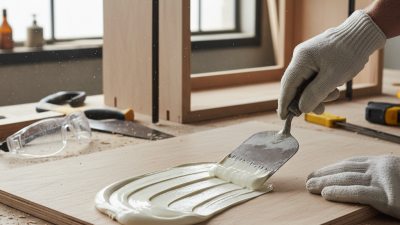
After preparation, mix the urea formaldehyde glue according to manufacturer instructions. Pay attention to the recommended ratios to achieve optimal bonding strengths, which can exceed 6000 psi when correctly applied. Apply the glue evenly. Use a brush or a roller for precise application. Avoid excess glue, as it can lead to longer drying times and messy finishes. Clamp the materials together securely to ensure proper adhesion.
Tip: Always work in a well-ventilated area due to potential fumes, which can vary depending on the formulation used. If you notice excess glue squeezing out during clamping, it’s a sign to readjust your application method. A common oversight is rushing the drying process. Allow the glue sufficient time to cure fully for best results. Taking these precautions can greatly enhance the durability of your projects.
Tips for Curing and Finishing Projects with Urea Formaldehyde Glue
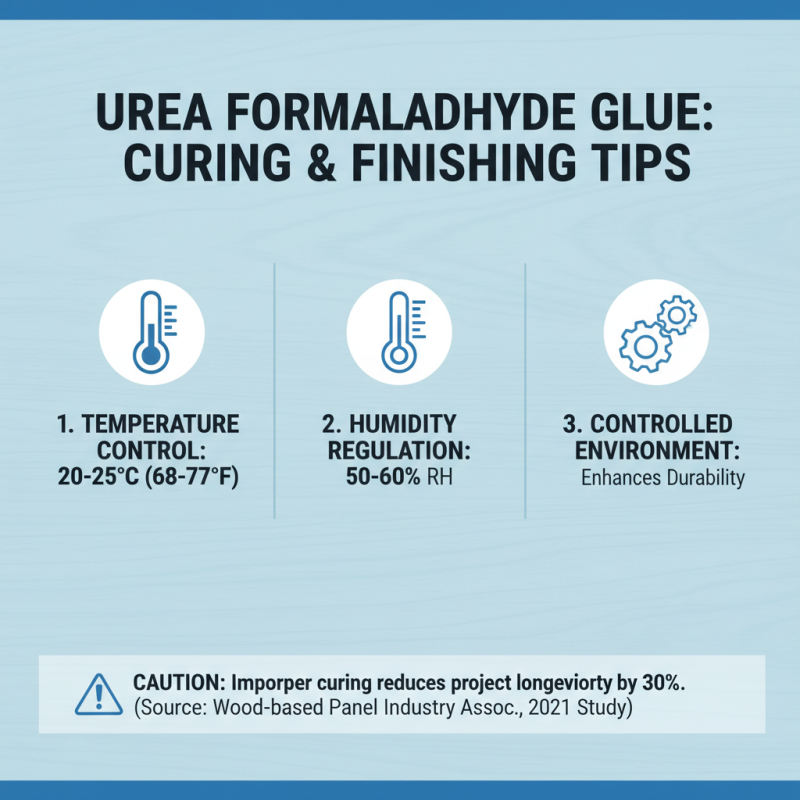
When working with urea formaldehyde glue, proper curing and finishing techniques are crucial. This adhesive, known for its strong bonding capabilities, requires attention to detail during the drying process. Ideally, projects should be cured in a controlled environment, with temperatures around 20-25°C (68-77°F) and relative humidity between 50%-60%. Achieving these conditions enhances the glue's performance, resulting in durable projects. A study by the Wood-based Panel Industry Association published in 2021 noted that improper curing can lead to compromised adhesion, reducing overall project longevity by nearly 30%.
Once the initial cure is done, finishing your project is equally vital. Sand your surfaces only after the glue has fully cured, which typically takes 24-72 hours. Incomplete curing may create issues like surface imperfections or delamination. For a smooth finish, consider using fine-grit sandpaper and dusting off any debris before applying a stain or sealant. A report from the Adhesive and Sealant Council highlights that projects not properly sanded can result in uneven finishes, highlighting the importance of a meticulous approach.
Keep in mind that urea formaldehyde glue can sometimes cause discoloration when exposed to UV light over time. It’s advisable to test your project for color fastness under varying conditions. Disregarding this could lead to unhappy results, especially in projects meant for visible areas. Balancing effective use of this adhesive with careful attention to finishing will certainly improve your end results.
 +86-15666836565

 CONTACT NUMBER