Leave Your Message

What Are the 2026 Top Hot Melt Adhesive Powder Types?

As textile, furniture, automotive, and electronics manufacturers seek cleaner bonding methods, Hot Melt Adhesive Powder is gaining practical attention in 2026. Its appeal is clear: solvent-free processing, fast activation, precise coating, and reduced liquid waste. Yet popularity does not guarantee suitability. A powder must match the substrate, heating process, wash resistance, flexibility, and final-use temperature.

Dr. Eric M. Petrie, an experienced adhesive specialist and author of technical adhesive references, emphasizes, “Adhesive selection must consider the entire assembly, not just the adhesive itself.” This principle frames our review of the leading 2026 powder types. TPU powder remains important for elastic textiles, breathable laminates, and soft-touch products. PA powder offers stronger heat resistance and durable bonding for demanding fabrics and industrial components. PES powder supports high-temperature applications and stable performance after repeated cleaning. EVA powder remains attractive where cost, easy processing, and moderate bonding strength matter. PO powder deserves attention for selected nonpolar substrates and specialized composites.

The details matter.

A fabric roll may look perfect after lamination, then fail after washing. A smooth panel may bond well during testing, yet peel after seasonal temperature changes. These are not minor surprises. They reveal incomplete evaluation. Buyers should compare particle size, activation temperature, melt flow, open time, bond strength, and storage stability. Supplier data helps, but controlled trials matter more. This guide examines the 2026 Hot Melt Adhesive Powder landscape with practical caution, because the “top” material depends on the product, process, and evidence behind the claim.

What Are the 2026 Top Hot Melt Adhesive Powder Types?

What Are Hot Melt Adhesive Powders and How Do They Work?

Hot melt adhesive powders are finely ground thermoplastic materials used to bond fabrics, films, foams, and technical surfaces. Unlike liquid adhesives, they contain little or no solvent. They remain solid during storage, then soften when exposed to controlled heat. Pressure helps the molten adhesive spread across the substrate. Cooling creates the bond.

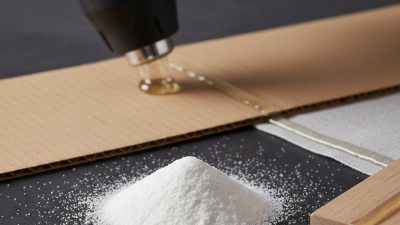
The working sequence is simple but sensitive. A powder layer is first scattered, printed, or applied through a coating process. Heat then activates the particles. The softened material flows into surface texture, including tiny gaps between textile fibers. Pressure improves contact. After cooling, the adhesive becomes solid again and holds the layers together.

Common powder families include TPU, polyamide, polyester, EVA, and copolyester. TPU powders often provide flexibility and soft handling. Polyamide powders can offer strong resistance to heat, oils, and washing. Polyester types may suit durable textile laminations. EVA powders usually support economical bonding where moderate performance is acceptable. Each type behaves differently under heat.

In production trials, particle size matters more than many users expect. Fine particles can create smoother coverage, while coarse particles may improve handling. The wrong melting range can cause scorching, weak adhesion, or fabric distortion. A powder can look perfect yet fail after washing. That is why I check temperature, pressure, coating weight, and cooling time together. The process is not fully forgiving.
Which Hot Melt Adhesive Powder Types Are Leading in 2026?

Which Hot Melt Adhesive Powder Types Are Leading in 2026?

TPU powder remains a leading choice for textile bonding, footwear, and flexible laminates. It offers elastic recovery, strong washing resistance, and a soft hand feel. Polyamide powder follows closely in demanding industrial applications. It handles heat, oils, and repeated stress better than many general-purpose options. Polyester and copolyester powders are also gaining attention in technical textiles and automotive interiors. MarketsandMarkets projects the broader hot melt adhesives market to grow from about USD 9.8 billion in 2023 to USD 12.3 billion by 2028. However, that report covers several adhesive forms, not powders alone. The ranking therefore needs careful interpretation.

EVA and polyolefin powders remain practical for cost-sensitive packaging and wood-related bonding. Their processing windows are usually forgiving. Yet, their heat resistance may disappoint in high-temperature assemblies. Grand View Research identifies packaging, transportation, and construction as major hot melt adhesive demand areas. These sectors increasingly value lower solvent use and faster processing. Still, “top” depends on the substrate, coating method, and service temperature. A popular powder can fail on a poorly prepared surface.

Tips:

Test powder flow, melting range, peel strength, and wash durability together. Check the actual application temperature, not only the datasheet value. Small laboratory trials reveal problems early. In my experience, TPU is often overselected. A cheaper polyester grade may perform better in a stable, high-volume process. Recheck the decision after aging tests.

How Do EVA, TPU, PA, PES, and PO Powders Differ?

EVA, TPU, PA, PES, and PO powders serve different bonding problems. Their performance depends on melting behavior, substrate chemistry, flexibility, and washing resistance. According to Grand View Research’s 2024 hot melt adhesives report, the global market was valued at more than USD 10 billion in 2023. Demand continues across textiles, footwear, automotive interiors, and technical laminates.

EVA powder remains a practical choice for cost-sensitive textile lamination. It offers good adhesion and moderate flexibility, but its heat and chemical resistance can be limited. TPU powder provides stronger elasticity and abrasion resistance. It suits stretch fabrics, sportswear, and soft-touch assemblies. MarketsandMarkets projects continued growth in reactive and specialty hot melt technologies through 2028, reflecting stricter performance requirements. Still, TPU may soften under prolonged heat.

PA powder delivers high heat resistance and strong bonding on demanding substrates. It is often selected for automotive and industrial laminates. PES powder offers balanced thermal stability and chemical resistance, especially in durable textile constructions. PO powder has low moisture absorption and a relatively clean processing profile. It can work well with polyolefin-based surfaces, where other powders struggle. It melts cleanly. Trade-offs remain. A powder with excellent peel strength may reduce softness, while a flexible grade may weaken after repeated washing. Technical data sheets help, but laboratory trials reveal the real result. Processing temperature, particle size, coating weight, and fabric tension can change performance more than expected.

What Factors Determine the Best Powder Type for Each Application?

Choosing the best hot melt adhesive powder begins with the materials being joined. A flexible textile may need thermoplastic polyurethane powder for stretch and soft hand feel. Rigid panels often require polyester or polyamide powders with higher heat resistance. Paper, foam, and synthetic fabrics can react differently to the same adhesive. Test the real substrates, not only sample cards.

Processing conditions matter just as much. Check the activation temperature against the substrate’s heat tolerance. Excessive heat can discolor fabric or deform thin plastic. Particle size also affects coating uniformity, penetration, and bonding strength. Fine powder may create a smoother layer, while larger particles can support heavier application weights. Application method matters. Powder printing, scattering, and electrostatic coating do not deliver identical results.

Performance after bonding deserves close attention. Measure peel strength, washing durability, flexibility, aging resistance, and appearance. Moisture-sensitive applications may require a powder with stronger water resistance. Outdoor products need testing under heat, humidity, and repeated temperature changes. A lab result can mislead. Production speed, pressure, cooling time, and operator technique may change the outcome. In my experience, the “strongest” powder is not always the best choice. A slightly softer adhesive may perform better when fabrics bend, stretch, or face repeated cleaning. Keep records of failed trials too; they often reveal the real process limit.

How Are 2026 Trends Shaping Hot Melt Adhesive Powder Selection?

In 2026, hot melt adhesive powder selection is shifting from “strongest bond” to “best process fit.” Polyamide powders remain valuable for heat resistance and demanding textile laminations. Copolyester powders suit flexible fabrics and controlled washing performance. TPU powders support soft hand feel, stretch, and lower-temperature bonding. EVA powders often serve cost-sensitive, general-purpose applications. The choice is less obvious than it looks. A powder can pass laboratory peel tests, yet fail after humidity cycling or repeated laundering.

This change follows measurable market pressure. Grand View Research’s 2024 assessment projects the global hot melt adhesives market to grow at roughly 7% annually through 2030. MarketsandMarkets’ 2024 analysis identifies packaging as the largest application segment, while sustainability and production efficiency remain major purchasing factors. These signals favor powders that melt at lower temperatures, reduce coating weight, and work with recycled or heat-sensitive substrates. TPU and copolyester gain attention here, but polyamide still wins when thermal stability matters more than softness. Report figures are useful, not perfect. Powder-specific data is often grouped with other hot melt formats.

Tips: Compare melt range, open time, viscosity, particle size, and washing results. Test the actual fabric or film, not a substitute. Measure energy use per bonded meter. Ask for technical data, migration information, and batch consistency. Plant trials often show that a slightly slower powder can improve line stability. That trade-off is easy to miss. Keep one backup grade for seasonal humidity changes and recycled-material variation.