China Best Urea Formaldehyde Glue Uses and Benefits Explained
Urea Formaldehyde Glue plays a crucial role in the manufacturing and construction industries. Renowned expert Dr. Emily Zhang, a leading adhesive technology specialist, states, “Urea Formaldehyde Glue provides unmatched bonding strength and durability.” This powerful adhesive is widely used in plywood, particleboard, and various furniture applications.
The benefits of Urea Formaldehyde Glue extend beyond its strong adhesion. This glue has excellent moisture resistance and improves overall product longevity. However, not all applications may suit this adhesive. Careful consideration of conditions and materials is vital for optimal results.
As industries evolve, the demand for eco-friendly options increases. Urea Formaldehyde Glue faces scrutiny regarding its environmental impact. Companies must balance performance with sustainability. The journey of Urea Formaldehyde Glue is one of innovation and adaptation, prompting a continuous search for more sustainable practices in adhesive technology.
Overview of Urea Formaldehyde Glue in China
Urea formaldehyde glue is widely used in China due to its strong bonding properties. This adhesive is popular in the manufacturing of furniture, plywood, and particleboards. The chemical composition allows it to cure quickly and provide a durable bond. Its uses extend to the construction industry, where it helps in crafting solid wood products.
However, the application of urea formaldehyde glue is not without its complications. The glue can emit formaldehyde gas, which poses health risks. Safe handling practices are essential to minimize exposure. There is also concern regarding its adhesion strength in humid conditions. Customers often seek alternatives due to fears about indoor air quality.
Despite these issues, many industries continue to rely on this glue for its efficiency. It remains a preferred choice for both cost and performance. With ongoing advancements in adhesive technology, improvements may emerge. The future could offer safer formulations without compromising on quality.
Key Applications of Urea Formaldehyde Glue in Various Industries
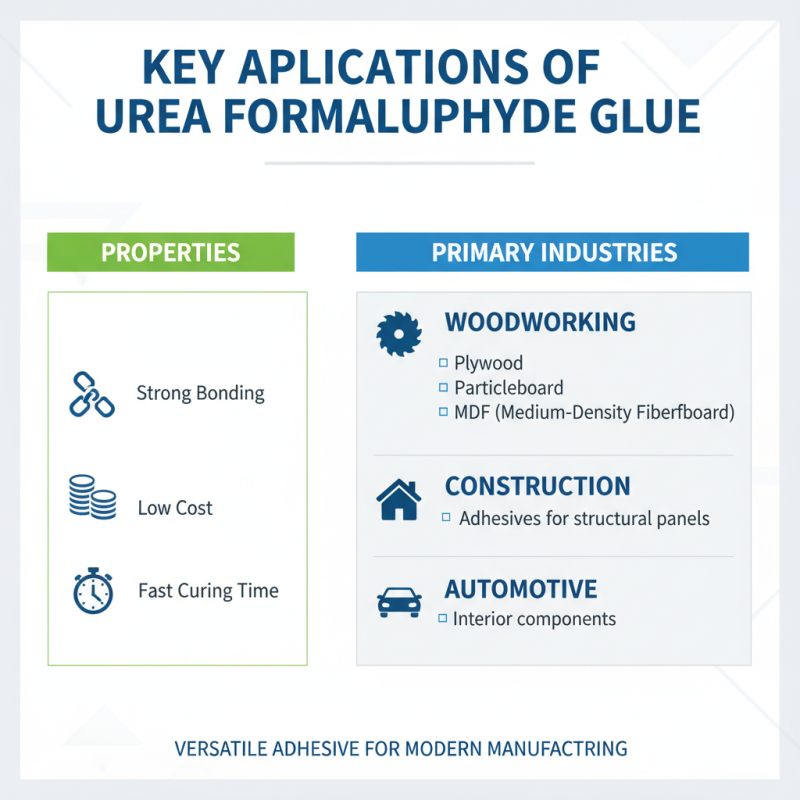
Urea formaldehyde glue is widely used across various industries due to its unique properties. It’s known for strong bonding and low cost. This adhesive is especially popular in the woodworking industry. It holds together materials like plywood, particleboard, and medium-density fiberboard. Its fast curing time allows manufacturers to speed up production.
In construction, urea formaldehyde glue plays an essential role in creating durable building materials. Many insulation boards and laminates rely on this adhesive. It enhances structural integrity, ensuring long-lasting results. The automotive industry benefits from its use in interior components, providing a robust bond for upholstery and trim.
While urea formaldehyde glue presents many advantages, there are concerns regarding its emissions. Inadequate ventilation can lead to exposure risks. These considerations are vital for ensuring worker safety. Industries utilizing this glue should implement strict safety protocols. Regular assessments will help manage potential risks effectively.
Benefits of Using Urea Formaldehyde Glue for Construction and Furniture
Urea formaldehyde glue is widely used in construction and furniture manufacturing. Its popularity stems from its strong bonding properties. Research indicates that this adhesive can offer tensile strength up to 4,500 psi, making it suitable for high-stress applications. The glue's quick drying time also enhances productivity on job sites. This can be crucial for manufacturers that require efficiency to meet tight deadlines.
In furniture production, urea formaldehyde glue is valued for its moisture resistance. It helps prevent swelling and warping in wood products, contributing to long-lasting durability. A study by the Wood Products Council highlighted that using this adhesive can reduce material wastage by 15%. This not only promotes sustainability but also supports cost-effectiveness in large-scale projects.
There are challenges in using urea formaldehyde glue as well. It contains formaldehyde, which can release volatile organic compounds (VOCs) into the air. Continuous exposure could lead to health issues. The industry is aware of this concern. Many manufacturers are now looking for strategies to minimize emissions while retaining the glue's effectiveness. Balancing performance and safety remains an ongoing challenge for professionals.
Benefits of Using Urea Formaldehyde Glue for Construction and Furniture
Environmental Considerations and Safety Measures with Urea Formaldehyde Glue
Urea formaldehyde glue is widely used in the woodworking and construction industries. However, there are essential environmental considerations to keep in mind. Research indicates that this type of adhesive can release formaldehyde gas, a known volatile organic compound (VOC). This emission poses potential health risks, especially in poorly ventilated areas.
To address these concerns, safety measures are crucial. Proper ventilation is necessary when working with urea formaldehyde glue. The U.S. Environmental Protection Agency (EPA) suggests maintaining adequate airflow in workspaces to minimize exposure. Personal protective equipment, such as masks and gloves, can also help protect users from inhalation and skin contact. Studies show that regular monitoring of formaldehyde levels in environments using this glue is beneficial for long-term safety.
Additionally, opting for low-emission products can reduce some risks associated with urea formaldehyde. Some manufacturers have developed formulations that comply with stringent environmental standards. These low-emission products help maintain indoor air quality while still offering strong adhesive properties. Nonetheless, users should remain cautious and informed about the materials they choose for their projects.
Comparative Analysis: Urea Formaldehyde Glue vs. Other Adhesives
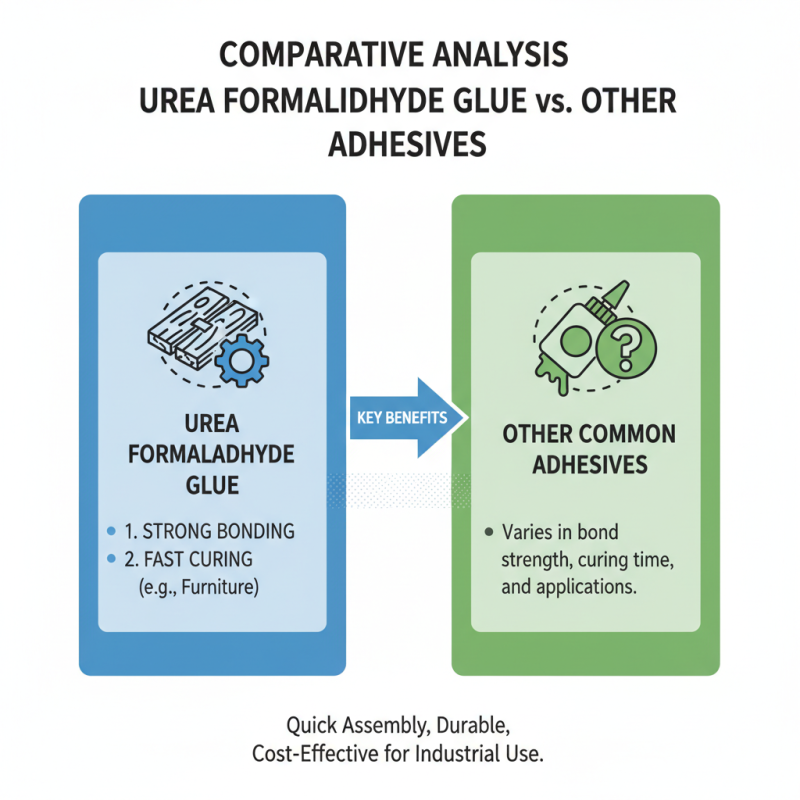
Urea formaldehyde glue is a widely used adhesive known for its strong bonding capabilities. Compared to other adhesives, it offers unique benefits that make it a popular choice in various industries. Its fast curing time allows for quick assembly processes. This feature is particularly valuable in furniture manufacturing.
When looking at alternatives like polyvinyl acetate or epoxy, urea formaldehyde stands out for its heat resistance and durability. It bonds well to wood and is ideal for making laminated products. However, it can emit formaldehyde gas during the curing process, raising air quality concerns. Users must ensure proper ventilation while working with it.
In terms of cost-effectiveness, urea formaldehyde glue often provides a more affordable option compared to other high-performance adhesives. It’s readily available and widely trusted. Yet, it’s essential to reflect on its environmental impact and explore safer alternatives if sensitivity to emissions is a concern. Balancing performance with safety is crucial in adhesive selection.
 +86-15666836565
 CONTACT NUMBER