How to Choose the Best Hot Melt Glue for Your Projects?
In the world of crafting, construction, and manufacturing, choosing the right "Hot Melt Glue" is crucial. According to the Adhesive and Sealant Council, the global hot melt adhesive market is projected to reach $9.15 billion by 2025. This rapid growth highlights its importance in various applications. Experts emphasize that selecting the appropriate type of glue can greatly enhance project outcomes.
Dr. James Finch, an industry expert in adhesives, states, "The right hot melt glue can make or break a project." His insight underscores the significance of understanding the specific requirements of your application. Different projects demand different formulations. Factors such as temperature resistance, bonding speed, and substrate compatibility are critical.
However, not all hot melt glues are created equal. It's essential to evaluate their performance based on your needs. Trial and error may be necessary. Consider your project’s unique elements to identify the ideal adhesive. Remember, the wrong glue can lead to failures and frustrations, making informed choices ever more essential.
Understanding the Basics of Hot Melt Glue and Its Applications
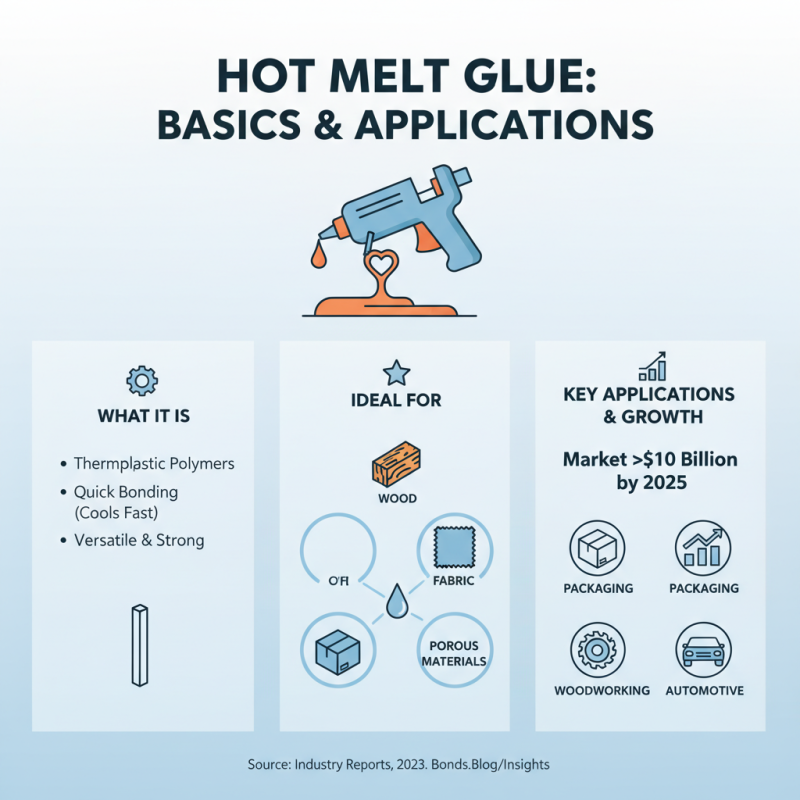
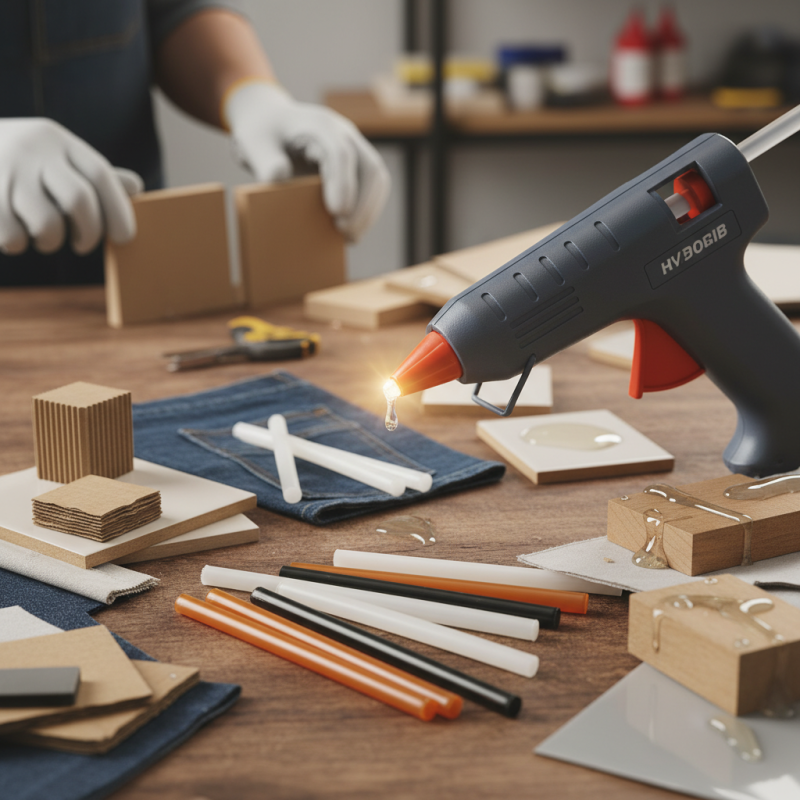
Hot melt glue is versatile and commonly used in various projects. It is made from thermoplastic polymers that bond quickly upon cooling. The glue works best with porous materials like wood and fabric. According to industry reports, the hot melt adhesive market is expected to grow significantly, reaching over $10 billion by 2025. This growth reflects its increased use in packaging, woodworking, and automotive applications.
Understanding the different types of hot melt glue is crucial. There are general-purpose adhesives and specialized versions designed for specific tasks. For example, some are made for high-temperature applications while others handle low temperatures effectively. Not all hot melt glues are created equal. An inappropriate choice might lead to weak bonds or quickly degraded results. A study showed that nearly 30% of projects failed due to using the wrong adhesive type.
When selecting hot melt glue, consider the surface materials and required bond strength. In some cases, budget constraints lead to choosing cheaper options, resulting in poor quality. It’s essential to balance cost and effectiveness. Reflecting on prior projects can help guide these decisions, ensuring better outcomes for future endeavors. Experimenting and testing different formulations may yield surprising results that enhance project efficiency.
Identifying Different Types of Hot Melt Glue for Various Materials
Choosing the right hot melt glue is essential for successful projects. Different types of hot melt glue are formulated for various materials. Understanding these differences can lead to better results in your crafts or repairs.
For fabric projects, a low-temperature hot melt glue works wonders. It allows you to bond delicate fabrics without damaging them. However, it may not hold up under stress. In contrast, high-temperature glues create strong bonds for wood and plastics. They offer durability but can scorch heat-sensitive materials. Finding this balance can be tricky.
Additionally, there are specialty glues designed for specific applications. For example, some formulations are ideal for metal bonding. Others excel in creating waterproof seals. Experimenting with these options can yield unexpected outcomes. Sometimes, the glue might not perform as expected. Always test on a small area first. Understanding the characteristics of each type can enhance your crafting experience. Embrace trial and error; it's part of the learning process.
How to Choose the Best Hot Melt Glue for Your Projects?
This chart illustrates the effectiveness of different types of hot melt glue for various materials commonly used in projects.
Evaluating Temperature Settings and Performance for Project Needs
When selecting a hot melt glue, understanding temperature settings is crucial. Different projects require different heat levels for optimal adhesion.
Low-temperature glue works well for delicate materials. It provides a strong bond without damaging items like fabric or foam.
High-temperature glue is ideal for heavy-duty applications. It offers excellent bonding strength for wood, metal, and ceramics.
Performance is another key aspect to consider. Hot melt glues vary in their drying times and adhesive qualities. Some formulations set quickly, while others allow for repositioning after application. Knowing the specific needs of your project can help you choose wisely.
For instance, crafts often require a glue that dries clear and remains flexible. In contrast, construction tasks may need a glue that is more rigid once set.
Evaluating your project’s needs might lead to some trials and errors. Not every glue will perform as expected, even when applying it correctly.
Observing how different glues react under various conditions can reveal their true potential. If a glue fails to bond properly, it may require a reevaluation of temperature settings or application techniques.
Considering Set Time and Bond Strength in Your Project Selection
When choosing hot melt glue, consider set time and bond strength for your specific project. Set time refers to how quickly the glue bonds surfaces. For a fast-paced project, you might need a glue with a short set time. This allows you to move on to the next steps without delays. For instance, if you are assembling a quick craft, a faster set time can be beneficial. However, rushing can sometimes lead to imperfect bonds.
Bond strength is equally important. It reflects how well two surfaces are held together. Stronger bonds are essential for heavier materials or outdoor applications. You may find that some adhesives hold well initially but weaken over time. This is particularly true in varying temperatures or under stress. Consider testing different adhesives on scrap materials before applying them to the final project. This trial can save time and materials in the long run.
It’s good to remember that not all projects are straightforward. Your ideal adhesive may depend on the materials involved. Wood, plastic, and metal each require different considerations for bond strength. Reflect on the project requirements and the environments your creations will face. Adaptability is key when selecting the best hot melt glue.
How to Choose the Best Hot Melt Glue for Your Projects? - Considering Set Time and Bond Strength in Your Project Selection
| Glue Type |
Set Time (minutes) |
Bond Strength (lbs/in²) |
Best For |
| General Purpose |
20 |
300 |
Crafts, Woodwork |
| High Temperature |
15 |
500 |
Heavy Duty, Metal |
| Low Temperature |
45 |
250 |
Delicate Materials |
| Clear Glue |
25 |
350 |
Glass, Plastic |
| Wood Glue |
30 |
400 |
Wood Projects |
Safety Tips and Proper Handling of Hot Melt Glue Products
When working with hot melt glue, safety should be a top priority. This adhesive can reach high temperatures, often exceeding 350°F. Always wear protective gloves and eye protection to shield yourself from burns or splashes. Consider working in a well-ventilated area. Fumes may occur, and proper airflow minimizes risk.
Proper handling is just as crucial. Keep the glue sticks and gun away from children to prevent accidents. Don't touch the nozzle immediately after use; it remains hot for a while.
If glue spills occur, clean them promptly with a damp cloth, but be cautious not to touch the hot glue directly. Always have a first aid kit on hand, ready for minor burns or accidents.
Using hot melt glue requires practice. You may find that some projects do not turn out as expected. Take a moment to analyze what went wrong. Learning from mistakes can lead to better techniques. Experiment with different settings and adhesion materials, but always prioritize safety. Your well-being is crucial in every project.
 +86-15666836565

 CONTACT NUMBER