Why Hot Melt Adhesive Pellets Are Essential for Your Projects?
Hot Melt Adhesive Pellets have become indispensable in various industries, including packaging, woodworking, and textiles. According to a report by the Adhesive and Sealant Council, the global demand for hot melt adhesives is projected to reach $10.65 billion by 2025. This growth underscores the increasing reliance on these versatile adhesive solutions.
These pellets offer numerous benefits, such as quick bonding, high flexibility, and environmental safety. Manufacturers appreciate their ability to bond a wide range of substrates, often without the need for additional solvents. However, not all products on the market provide the same level of performance. Some formulations may lack the durability necessary for demanding applications, leading to failures in crucial projects.
Incorporating Hot Melt Adhesive Pellets into your processes ensures you remain competitive. It is crucial to choose quality products that meet industry standards. Various reports highlight that improper use can lead to inefficiencies and increased costs. Therefore, understanding the nuances of these pellets is essential for achieving optimal results in your projects.

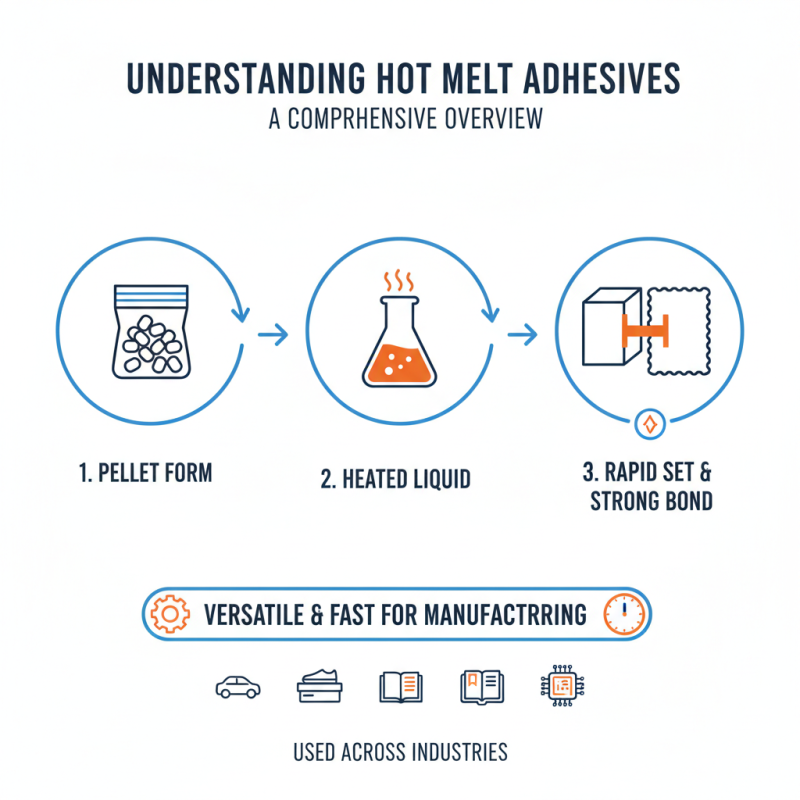
Understanding Hot Melt Adhesives: A Comprehensive Overview
Hot melt adhesives are versatile bonding solutions widely used across various industries. These adhesives come in pellet form, making them easy to handle and store. When heated, they melt into a viscous liquid. Upon cooling, they solidify quickly, creating a strong bond. This rapid setting time is crucial in manufacturing, where speed is essential.
Understanding the composition of hot melt adhesives is key to their effectiveness. They typically consist of a polymer matrix, tackifiers, and additives. The balance of these materials affects the adhesive's performance. For instance, some adhesives offer better flexibility, while others provide greater strength. Adapting the formulation can lead to better results. However, it’s essential to consider environmental factors, as extreme temperatures can influence adhesion quality.
These adhesives are not without challenges. Depending on the application, difficulties can arise with substrate compatibility. For example, certain plastics may not bond well with standard hot melt adhesives. Testing and adjustments may be required to achieve optimal performance. This process can be time-consuming, but it's vital for ensuring a reliable bond in critical applications.
The Composition and Types of Hot Melt Adhesive Pellets
Hot melt adhesive pellets are versatile and effective for various projects. Understanding their composition is essential to select the right type. These pellets are primarily made from thermoplastic polymers, commonly including EVA (ethylene-vinyl acetate), PA (polyamide), and EAA (ethylene-acrylic acid). Each type offers unique properties that suit different applications. For instance, EVA provides excellent adhesion and is widely used in packaging industries.
Different projects require specific types of hot melt adhesives. For high-temperature applications, polyamide is favorable due to its thermal stability. On the other hand, EAA is preferred in case of moisture resistance needs. According to industry reports, the global hot melt adhesive market is expected to reach $9.4 billion by 2027, showcasing its increasing importance. Choose the right type based on your project requirements to ensure quality.
Tip: Always test a small batch of adhesive on your materials before full application. This helps avoid mistakes in adhesion strength. Observing drying times and temperature resistance can save time and resources. Keep in mind that not every adhesive is suitable for every project. Be prepared to adapt your approach.
Key Benefits of Using Hot Melt Adhesive Pellets in Projects
Hot melt adhesive pellets are versatile tools for various projects. They provide a strong bond across different materials, including wood, fabric, and plastics. Their quick-drying nature allows for instantaneous results, which is crucial when time is of the essence. You can apply them with ease using a glue gun or even manually. The adhesive forms a solid connection once cooled. The bond remains stable, even under stress.
One notable benefit is the clean application process. These pellets minimize mess, leading to less waste and easier clean-up. You can work with precision, applying only what you need. Also, hot melt adhesives are often resistant to moisture and temperature changes. This durability can enhance the longevity of your projects. However, it's essential to consider your project's specific needs before choosing this adhesive. Not all applications will benefit equally from hot melt pellets.
Flexibility is another crucial advantage. Hot melt adhesive pellets can adapt to various substrates. This adaptability opens up possibilities for creative solutions. Yet, projects requiring high strength or special conditions may need further testing. Experimentation with different materials and applications can help identify the best use of hot melts. Understanding their capabilities under different circumstances is vital for achieving reliable results.
Key Benefits of Using Hot Melt Adhesive Pellets
Applications of Hot Melt Adhesive Pellets Across Industries
Hot melt adhesive pellets are highly versatile and vital across various industries. In packaging, they provide strong bonding for carton sealing. According to a report by Freedonia Group, the global hot melt adhesive market is projected to reach $10.6 billion by 2025, reflecting their growing importance. These pellets excel in automotive applications as well, offering durable adhesion in assembling components.
In woodworking, hot melt adhesives enhance the quality of furniture. They ensure a clean finish and reduce production time, making them crucial in high-demand environments. The textile industry benefits from these adhesives in manufacturing shoes and clothing, showcasing their adaptability. Using hot melt adhesive pellets can result in a 30% reduction in overall processing time, highlighting their efficiency.
**Tips:** Choose the right temperature setting for your application. Too high can cause scorching; too low may result in weak bonds. Always conduct bonding tests before final application to ensure effectiveness. Inspect your equipment regularly to avoid operational hiccups, which can be detrimental to output quality.
Best Practices for Working with Hot Melt Adhesive Pellets
When working with hot melt adhesive pellets, understanding best practices can significantly improve project outcomes. One critical aspect is maintaining the right temperature during application. Pellets typically melt between 250°F to 350°F. An incorrect temperature can lead to inadequate bonding. According to recent industry reports, about 20% of adhesive failures stem from improper heating methods.
Preparation is also vital. Ensure the surfaces to be bonded are clean and dry. Even a small amount of dust can compromise adhesion. Tips: Always test a small area first. This helps validate your cleaning methods and adhesive performance. Testing allows you to identify any weaknesses before full-scale application.
Additionally, consider the application rate. Too much adhesive can create messiness, while too little can lead to weak bonds. A consistent bead size encourages stronger adhesion. Reports show that optimizing bead size can enhance the bond strength by up to 30%. Tips: Use a precision applicator to manage the flow. This will provide better control and minimize wastage.
 +86-15666836565

 CONTACT NUMBER