Why Are Hot Melt Glue Pellets Essential for Your Crafting Projects?
Crafting enthusiasts often overlook the importance of quality adhesives. Hot Melt Glue Pellets stand out as a vital component for various projects. Renowned adhesive expert, Dr. Emily Sanders, highlights their significance: “Hot Melt Glue Pellets provide a strong bond that can transform any craft project.”
These pellets are versatile, able to adhere to wood, fabric, and plastic with ease. The instant bonding properties save time and enhance creativity. However, not all Hot Melt Glue Pellets are created equal. Selecting the right type is crucial for your specific project needs.
Consider the melting point and material compatibility. Experimenting with different brands can yield unexpected results. Crafting is about exploration, and sometimes the mistakes lead to the best innovations. By integrating Hot Melt Glue Pellets into your crafting arsenal, you unlock immense potential for creativity and effective results.
The Importance of Hot Melt Glue Pellets in Crafting
Hot melt glue pellets play a vital role in crafting. Their versatility and strength have made them a go-to choice for crafters globally. According to industry insights, hot melt adhesives hold a significant market share, with over 30% used in various DIY projects. This reflects their reliability and effectiveness in delivering strong bonds and quick adhesion.
For various projects, hot melt glue pellets are preferred for their quick setting time. They bond quickly, making them ideal for crafts that require immediate holding. They work well on multiple materials like paper, fabric, and wood. However, achieving the perfect bond often requires practice. Sometimes, the heat level can affect adhesion reliability, so it's important to fine-tune your technique.
Tips: Always test the glue on a scrap piece first. This will help you get a feel for the glue’s properties. Consider the temperature control when using a glue gun, as overheating can lead to a weaker bond or burnt materials. Slight adjustments can improve results significantly. Reflect on your past projects and consider whether the glue choice contributed to any challenges. Taking notes can help you identify patterns for future creations.
Why Are Hot Melt Glue Pellets Essential for Your Crafting Projects?
Understanding the Composition of Hot Melt Glue Pellets
Hot melt glue pellets are a powerhouse in the crafting world. These small, solid pieces of adhesive are composed primarily of thermoplastic polymers, which become molten when heated. The composition usually includes a mix of ethylene-vinyl acetate (EVA) and other polymers, ensuring strong adhesion. According to a report by the Adhesive and Sealant Council, the global hot melt adhesive market is projected to reach $8 billion by 2025, reflecting their growing importance in DIY projects.
When working with hot melt glue, temperature control is crucial. The ideal application temperature ranges between 350°F and 380°F. At these temperatures, the glue flows smoothly, allowing for detailed applications. However, if the temperature exceeds 400°F, the adhesive can degrade, losing its effectiveness. This emphasizes the importance of temperature management in crafting projects.
Tips: Always test the glue on scrap material first. This helps gauge the bond strength and drying time. Keep a thermometer handy to monitor temperatures accurately. When using hot melt glue, consider that not all applications are perfect. Sometimes the bond may not hold due to surface irregularities. Don’t hesitate to re-evaluate your method and experiment with different surfaces or preparation techniques.
Key Advantages of Using Hot Melt Glue in Projects
Hot melt glue pellets have become a go-to for many crafting enthusiasts. These pellets are easy to use and melt quickly, making them ideal for various projects. The instant bond they create ensures your materials stay secure. Unlike traditional glue, they solidify rapidly, saving you time.
One key advantage of hot melt glue is its versatility. It works well on diverse surfaces, including fabric, wood, and plastic. This adaptability allows crafters to explore new ideas without worrying about compatibility. However, achieving a strong bond requires the right temperature. Overheating can ruin projects, so monitoring the glue gun is essential.
Another benefit is the flexibility of the bond once dried. This feature is beneficial in crafting, where movement may occur. While most glues become rigid, hot melt glue maintains a degree of flexibility. Nevertheless, it can be messy. Users should be cautious not to overapply. Cleaning up dried glue can be tedious, yet the advantages often outweigh the drawbacks. The right technique can enhance your crafting experience.
Why Are Hot Melt Glue Pellets Essential for Your Crafting Projects? - Key Advantages of Using Hot Melt Glue in Projects
| Advantage |
Description |
Application Examples |
| Quick Bonding |
Hot melt glue pellets provide a strong bond within seconds of application, reducing waiting time. |
Crafting, home repairs, and assembly projects. |
| Versatility |
Suitable for a variety of materials such as wood, fabric, plastic, and metal. |
Decorative items, gift wrapping, and DIY projects. |
| Ease of Use |
Easy to apply with a glue gun; minimal mess compared to liquid glues. |
Scrapbooking, jewelry making, and model building. |
| Durability |
Offers strong, heat-resistant adhesion ideal for long-lasting projects. |
Outdoor decorations, repairs on items exposed to heat. |
| Quick Cleanup |
Excess glue peels off easily once it cools down, allowing for quick cleanups. |
General crafting and projects that may need adjustments. |
Varieties of Hot Melt Glue Pellets and Their Uses
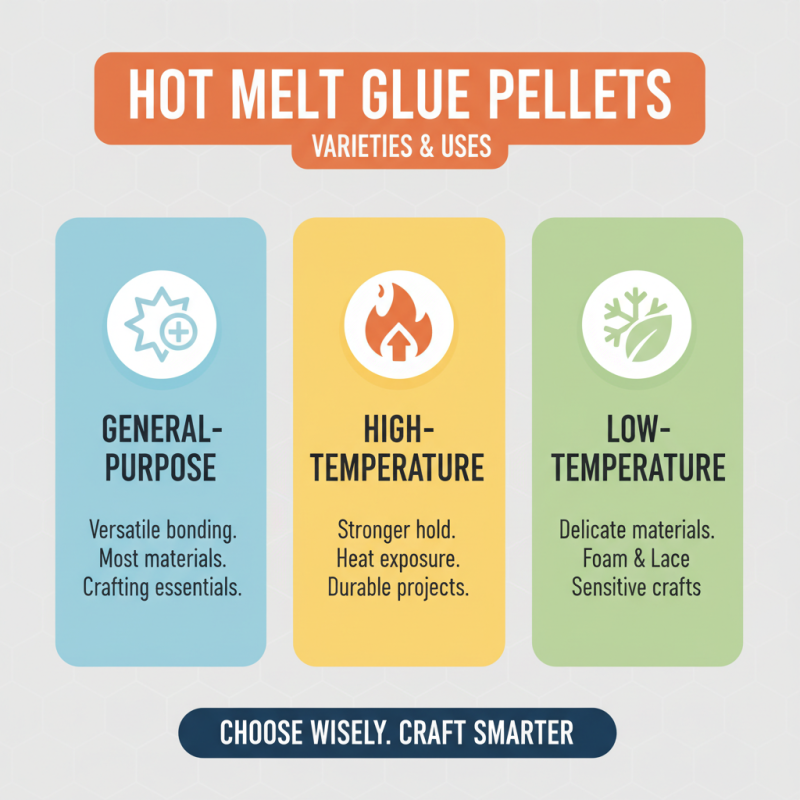
Hot melt glue pellets come in various types, each designed for specific crafting applications. The standard general-purpose pellets offer versatility. They bond a range of materials, making them ideal for most projects. High-temperature pellets provide stronger adhesion. They work well for items that will be exposed to heat. Low-temperature options are perfect for delicate materials, like foam and lace. Choosing the right type is crucial for project success.
Tips for using hot melt glue pellets include keeping the glue gun at the right temperature. Too high can cause damage, while too low may result in weak bonds. Always test the glue on a small scrap of your material first. This helps avoid mistakes. Adjust your technique based on the material. For instance, apply a thicker layer for porous surfaces to improve adhesion.
Remember that practice makes perfect. If your bond fails, analyze what went wrong. Did you choose the right glue? Was the surface clean? Reflect on your process. Crafting is as much about learning as it is about creating. Don't be afraid to experiment with different types of pellets to find what works best for your specific needs. Each project is a new opportunity to refine your skills.
Tips for Effectively Using Hot Melt Glue Pellets in Crafts
Hot melt glue pellets are essential for crafting due to their versatility and strong adhesion. Users often appreciate their quick setting time. In fact, a study by Adhesive and Sealant Council found that nearly 85% of crafters prefer hot melt adhesives for projects requiring rapid bonding. This makes them ideal for various materials, such as fabric, wood, and plastic.
When using hot melt glue pellets, temperature control is crucial. A glue gun allows precise melting, leading to better results. Crafters should avoid overloading the glue gun; it can cause drips and uneven application. According to research, a consistent application of 1-2 layers typically yields the best bonding strength. Always test on a small surface first. This precaution helps prevent potential mishaps.
Timing is equally important. Once the glue is applied, you have only seconds to adjust before it hardens. This can be frustrating for beginners. Understanding the consistency and working time of the glue is key. Patterns and designs should be planned ahead to minimize mistakes. Recognizing these factors not only boosts confidence but also ensures a successful crafting experience.
 +86-15666836565

 CONTACT NUMBER