How to Choose the Best Adhesive for Wood Projects?
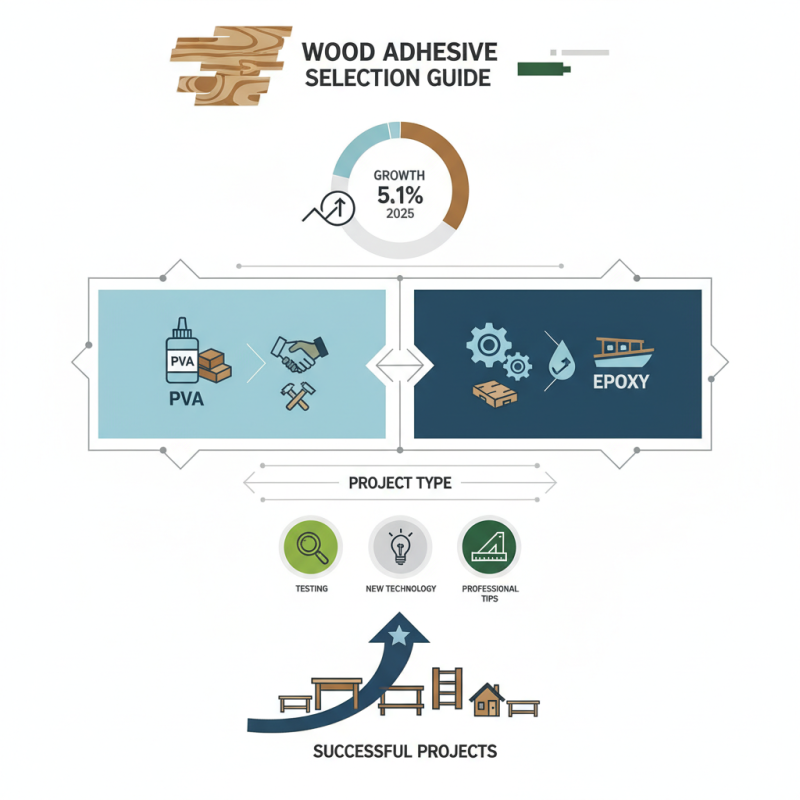
Choosing the right adhesive for wood projects can significantly impact durability and performance. Research shows that the woodworking adhesive market is predicted to grow by 5.1% annually through 2025. This increase reflects the rising need for quality and reliability in wood bonding applications. An effective adhesive for wood not only provides strong bonds but also adapts to the specific requirements of each project.
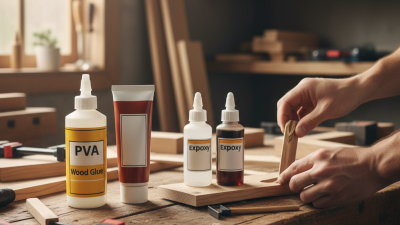
With various options available, from PVA to epoxy, it's crucial to understand their properties. For instance, PVA glues are ideal for general woodworking due to their ease of use and strong bonding capabilities. Conversely, epoxy adhesives deliver superior strength and resistance to moisture. However, selecting an adhesive requires careful consideration, as each could behave differently under various conditions.
Many woodworkers rely on general recommendations but may overlook unique project needs. Testing adhesives on scrap wood can help assess performance. Staying informed about advances in adhesive technology is vital. Professional carpenters frequently report that the right adhesive can elevate project quality, efficiency, and longevity. Ultimately, understanding these aspects can lead to more successful woodworking endeavors.
Understanding Different Types of Wood Adhesives: A Comprehensive Guide
When tackling wood projects, selecting the right adhesive can significantly impact the final outcome. Various adhesives cater to different needs — some are ideal for structural joints, while others are better suited for delicate applications. PVA (polyvinyl acetate) glue is popular among woodworkers for its ease of use and strong bonds. This type dries clear, making it perfect for furniture and cabinetry. However, it requires clamping, which can be challenging for novice users.
Conversely, polyurethane glue expands as it cures, ensuring a robust bond even in challenging conditions. This adhesive is waterproof but can be messy to work with. Users must account for the expansion during drying, which adds a layer of complexity. Epoxy adhesives are another option, providing exceptional strength and a durable finish. They are excellent for filling gaps and can be used on various surfaces. Yet, they often require precise mixing and longer curing times, which can be inconvenient.
Finally, there’s always the consideration of adjusting the adhesive choice based on project requirements. Some projects may benefit from a quick-drying adhesive, while others need a longer open time for adjustments. Reflecting on these elements helps improve future projects and enhances overall skills in woodworking. Each adhesive type has its strengths and weaknesses, urging woodworkers to experiment and find their preferred solutions.
Adhesive Strength Comparison for Wood Projects
Key Factors to Consider When Selecting Adhesives for Wood Projects
When selecting adhesives for wood projects, understanding your materials is crucial. Different wood types can absorb glue differently. Some hardwoods may require more precise adhesive types to ensure a strong bond. Consider the moisture content in your wood as well, as this can impact adhesion. Testing on a scrap piece can help identify the right fit.
The environment where the project will be used also matters. For indoor projects, standard wood glues may suffice. However, outdoor projects need waterproof options. Think about the overall appearance as well; some adhesives may leave a visible residue after drying. Clear adhesives could maintain the natural beauty of the wood.
Reflecting on past experiences can guide your choice. Remember, even a reputable adhesive might not work well in every situation. Often, people overlook the importance of following instructions provided by manufacturers. Always consider clamping time and curing conditions. A well-chosen adhesive is key to a successful wood project.
Evaluating Adhesive Strength: Wood Adhesive Performance Standards Explained
Evaluating adhesive strength involves understanding wood adhesive performance standards. Wood adhesives are tested for various qualities, including tensile strength and durability. According to industry data, the common tensile strength of wood glue can reach up to 3,000 psi. This figure indicates a strong bond, yet real-world application often reveals discrepancies. Environmental factors can significantly influence the adhesive’s performance.
Humidity and temperature can weaken the adhesive over time. Research shows that adhesives exposed to high moisture levels can lose up to 50% of their bonding strength. This is particularly important for outdoor projects or areas with fluctuating temperatures. Professionals advise testing the adhesive's performance in anticipated conditions before application.
Another aspect to consider is curing time. Different adhesives have varying curing times, which can impact workflow. A quick-setting adhesive might seem ideal, but it sometimes leads to weaker bonds if not properly applied. Many experts suggest allowing extra time for curing to enhance bond strength. By understanding these performance standards, you can navigate the complexities of choosing the right adhesive for your wood projects.
Application Techniques: How to Apply Wood Adhesives for Optimal Bonding
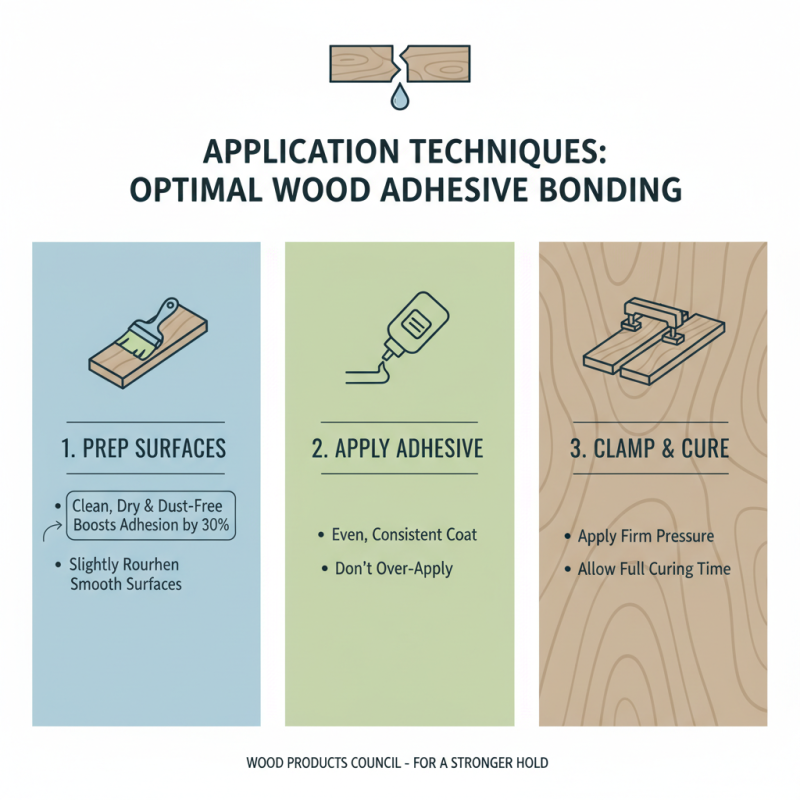
When applying wood adhesives, technique matters just as much as the product choice. Proper application can significantly enhance bonding strength. Begin by ensuring both surfaces are clean, dry, and free from dust or grease. According to the Wood Products Council, surfaces that lack contamination can boost adhesion by up to 30%. If the surfaces are too smooth, consider roughening them slightly. This increases surface area and creates a better mechanical bond.
Tips: Use a brush or roller for even coverage. Aim for about 1/8 inch bead of adhesive. Uneven application can lead to weak points in your bond.
After applying the adhesive, clamp the pieces together firmly. Industry studies indicate that adequate clamping pressure can raise bond strength by as much as 50%. Clamping ensures that adhesive flows into every crevice, optimizing the bond. Keep an eye on the curing times specified by the adhesive instructions. Rushing this can lead to catastrophic failure down the line.
Tips: Monitor your humidity levels. Excess moisture can weaken adhesive integrity and prolong cure times.
Environmental Impact and Safety Features of Wood Adhesives to Consider
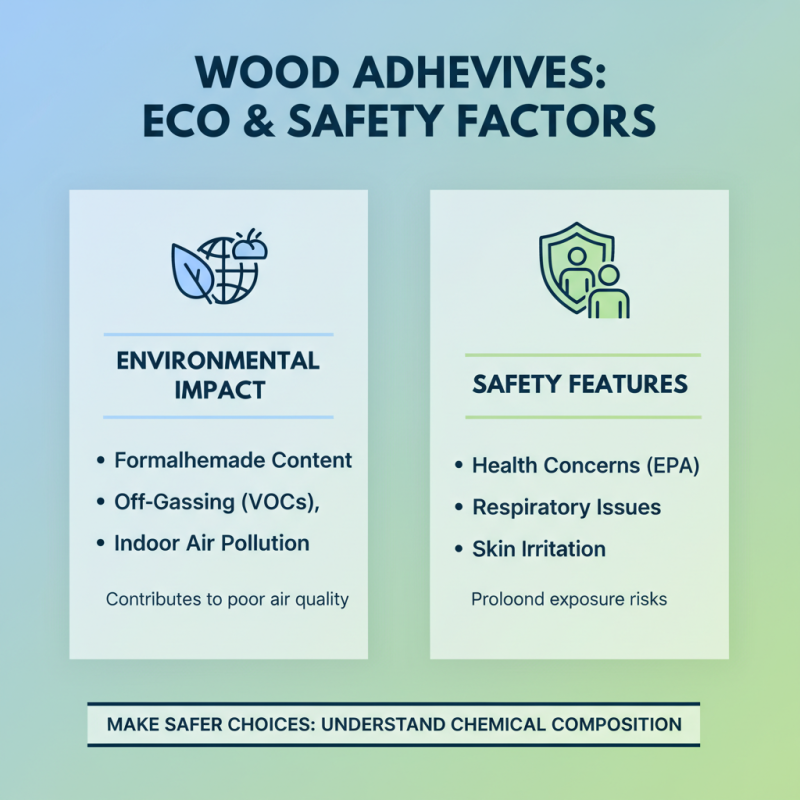
When choosing adhesives for wood projects, it’s crucial to consider their environmental impact and safety. Many wood adhesives contain formaldehyde, which can off-gas and contribute to indoor air pollution. According to the EPA, prolonged exposure may lead to various health issues, such as respiratory problems and skin irritation. Understanding the chemical composition of adhesives allows woodworkers to make safer choices.
The Green Building Council recommends using low-VOC (volatile organic compounds) adhesives. These products minimize harmful emissions and are often safer for both users and the environment. Research shows that using low-VOC adhesives can significantly reduce air pollutants in indoor spaces. For example, switching to water-based adhesives can cut emissions by up to 80%.
However, not all eco-friendly options are perfect. Some low-VOC adhesives may not provide the same bond strength as traditional ones. Evaluating the trade-offs between bond durability and environmental safety is essential. This scrutiny ensures that woodworkers not only create quality projects but also protect their health. Always rely on credible sources and safety data sheets to make informed decisions.
 +86-15666836565

 CONTACT NUMBER