Leave Your Message

How to Choose the Best Water Based Adhesive?

Choosing the best Water Based Adhesive requires more than comparing prices or advertised bond strength. The right choice depends on substrate, moisture exposure, drying conditions, application speed, and end-use safety requirements. A carton line running at 300 meters per minute needs different performance from a furniture workshop applying adhesive with a roller.

Industry demand is expanding. Grand View Research estimates that the global water-based adhesives market reached approximately USD 19 billion in 2023, with continued growth expected through 2030. MarketsandMarkets also identifies packaging, construction, woodworking, and automotive interiors as important demand sectors. These figures show opportunity, but they do not guarantee that every formulation will suit every production environment.

Small details matter.

As adhesive-industry educator Dr. Dave Dunn has stated, “The adhesive is only one part of the bond; surface preparation and process control matter just as much.” That principle deserves attention. A technically excellent product can fail when dust remains on corrugated board, when wood moisture changes, or when the drying tunnel lacks sufficient airflow.

This guide will examine viscosity, open time, setting speed, film flexibility, resistance to water, and compatibility with common materials. It will also consider volatile organic compound performance and workplace handling, because sustainability claims should be checked against technical documentation rather than accepted automatically.

There is no universal winner.

A lower-cost Water Based Adhesive may increase waste if operators need repeated applications. Conversely, a premium formulation may be unnecessary for a stable indoor package. Product data sheets, laboratory trials, and monitored production tests remain essential. Some recommendations may still require revision after real factory conditions expose variables that laboratory samples cannot reproduce.
How to Choose the Best Water Based Adhesive?

Understanding Water-Based Adhesives and Their Main Types

How to Choose the Best Water Based Adhesive?

Water-based adhesives use water as the carrier, not as the final bonding agent. After application, water evaporates or enters the substrate, leaving a polymer film. This process usually produces lower solvent emissions and easier cleanup. However, drying speed changes with humidity, temperature, coating weight, and surface porosity. A workshop test matters more than a datasheet alone.

The main types include polyvinyl acetate emulsions, acrylic emulsions, polyurethane dispersions, and starch or dextrin adhesives. PVAc works well on paper, wood, and porous packaging. Acrylics offer stronger weathering and aging resistance. Polyurethane dispersions suit flexible films and demanding laminations. Starch-based products remain useful for corrugated board and paper bonding, especially where cost matters. They can struggle with moisture. That weakness is easy to underestimate.

Market figures vary by research scope. Fortune Business Insights estimated the water-based adhesives market at about USD 10.08 billion in 2023, with continued growth through 2030. MarketsandMarkets also identifies packaging, construction, and transportation as major demand areas. These reports suggest broad adoption, but they do not replace application testing. Check open time, peel strength, shear resistance, and final moisture resistance. Test the exact substrate pair. A smooth coated carton may bond differently from recycled board. I have seen a product pass a dry test, then fail after humidity exposure. That result is inconvenient, but useful. The best choice balances polymer type, drying conditions, equipment, and the real service environment.
How to Choose the Best Water-Based Adhesive?

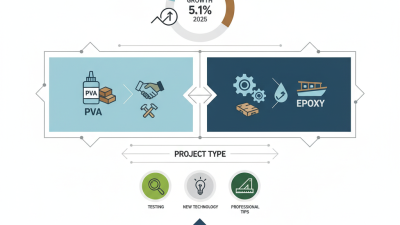
Water-based adhesives are commonly formulated with polymers such as PVA, acrylic, EVA, polyurethane dispersion, and natural rubber latex. Their solids content affects coverage, drying behavior, and the amount of water that must evaporate during bonding.

The chart uses representative midpoint values from commonly encountered technical ranges: PVA 40–55%, acrylic 40–60%, EVA 50–60%, polyurethane dispersion 30–60%, and natural rubber latex 50–65%. Actual values vary by formulation and application. Higher solids content can reduce drying demand, but the best adhesive also depends on substrate compatibility, flexibility, water resistance, open time, and required bond strength.

Identifying the Materials and Surfaces to Be Bonded

How to Choose the Best Water Based Adhesive?

Identifying the Materials and Surfaces to Be Bonded

Choosing a water based adhesive begins with identifying both surfaces, not just the product label. Paper, cardboard, fabric, wood, and some foams usually absorb moisture. Plastic, coated metal, glass, and sealed boards resist it. Surface texture matters. A porous surface may need a thicker application, while a smooth surface often requires careful cleaning and controlled coating weight.

In practical bonding trials, check whether either material contains wax, oil, dust, or release agents. These contaminants can weaken adhesion, even when the surfaces look clean. Light sanding may improve contact on sealed wood or rigid plastic, but excessive abrasion can create uneven bonding. For flexible materials, the adhesive must remain elastic after drying. Rigid materials may require stronger initial grab instead.

Small tests help. Apply the adhesive to a hidden area and join the surfaces under consistent pressure. Observe drying time, whitening, edge lift, and bond strength after 24 to 72 hours. Temperature and humidity can change the result significantly. A warm, dry room may produce a faster bond than a cool workshop.

A neat test can still mislead. I have seen bonds pass an immediate pull test and fail after moisture exposure. That is why the intended use matters. Will the item bend, carry weight, face condensation, or meet repeated handling? Recreate those conditions before choosing the final adhesive. Surface preparation is often the overlooked variable.

Comparing Adhesive Performance and Application Requirements

Choosing a water-based adhesive requires more than checking viscosity or price. Compare performance with the application’s actual demands: substrate porosity, line speed, drying conditions, and final load.

Grand View Research reported that the global water-based adhesives market could grow at about 5% annually through 2030. That growth reflects demand for lower-emission manufacturing, but water is not automatically harmless.

Drying can slow sharply in humid rooms. I have seen a clean-looking bond fail after overnight storage because moisture remained trapped between dense films.

Test the adhesive on the real materials.

Measure open time, wet tack, peel strength, shear resistance, and drying speed.

ASTM D1000 offers useful peel-testing guidance for pressure-sensitive constructions, while ASTM D3654 supports holding-power evaluation. These tests expose trade-offs.

A formulation may deliver excellent initial tack yet show weak heat resistance. Another may dry quickly but require higher coating weight.

Application conditions matter just as much. Smithers’ 2024 packaging outlook identifies efficiency and material compatibility as continuing industry priorities.

Check nozzle behavior, pump stability, foaming, and cleanup requirements during a full production shift.

Record temperature and relative humidity beside the test results. Small changes matter.

A 10°C drop can noticeably extend drying time, although the exact effect depends on solids content and airflow.

Do not rely only on supplier data. Independent trials are slower, and sometimes inconvenient, but they reveal the failures a polished datasheet cannot.

Checking Safety, Environmental Impact, and Storage Conditions

Choosing a water-based adhesive requires more than checking its water content. I once treated “water-based” as a safety shortcut. That was careless. Some formulas still contain preservatives, ammonia, or sensitising ingredients. Read the Safety Data Sheet before opening the pail. Check ventilation needs, skin protection, first-aid instructions, and the product’s VOC information. The European Environment Agency’s 2023 inventory identifies solvent and product use as roughly 40% of reported European NMVOC emissions. Lower VOC content helps, but it does not prove zero environmental impact.

Storage conditions can quietly affect performance. Keep containers sealed, upright, and away from direct sunlight. Many water-based adhesives need stable temperatures, commonly around 5–30°C, but the technical data sheet should control. Freezing can permanently damage the emulsion. Excessive heat can create skin, pressure, or viscosity changes. Record batch numbers and opening dates. A clean storage shelf is useful evidence when quality problems appear later.

Tips: Read the SDS. Ask suppliers for VOC testing, preservative details, and packaging guidance. Use older stock first, but inspect it for separation, odor, lumps, or unexpected thickening. The U.S. EPA Safer Choice program evaluates chemical ingredients and environmental attributes, yet certification is not universal. Compare documented test results, not attractive claims. I would also run a small bond test after storage; assumptions often fail in real workshops.

Testing, Selecting, and Applying the Most Suitable Adhesive

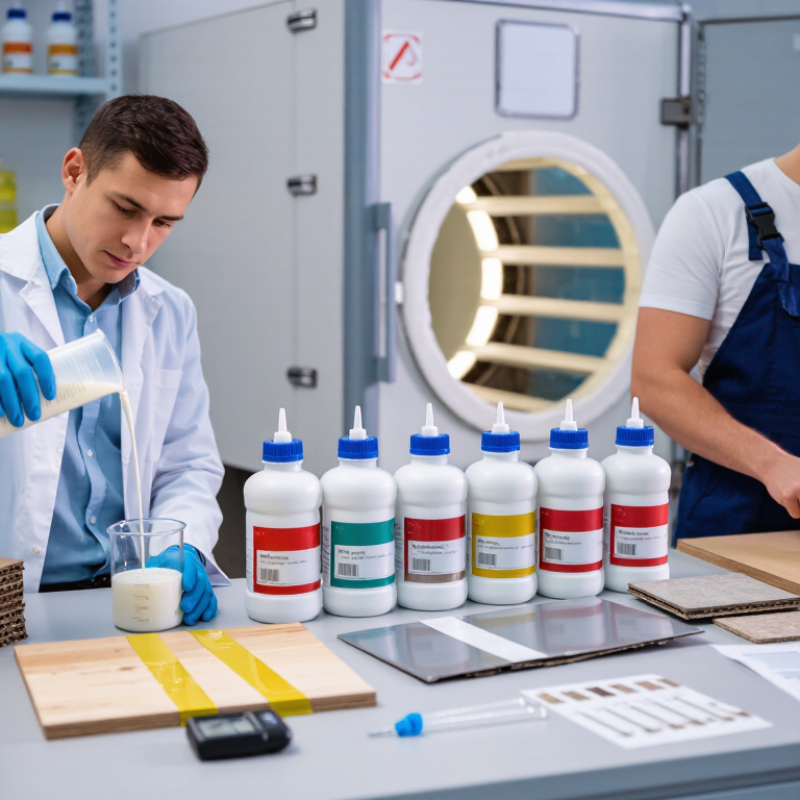
Choosing the best water based adhesive starts with testing, not guesswork. Identify the materials, surface porosity, expected load, and working temperature. A cardboard joint needs different performance from a laminated panel or fabric assembly. Clean both surfaces and remove dust, oil, and loose fibers. Apply a small, even bead. Record open time, bonding pressure, and drying conditions.

Test the adhesive on samples that match your real production materials. Press the pieces together for the recommended time, then inspect them after curing. Pull the joint slowly and observe the failure. A strong bond may tear the substrate instead of separating at the adhesive layer. Check flexibility, moisture resistance, appearance, and odor. I once judged a bond too early; it looked firm after ten minutes but failed overnight. That mistake showed why full curing matters.

Tips: Use a simple test log with dates, temperatures, and results. Spread adhesive evenly with a roller or notched tool. Avoid excessive application, which can extend drying time and cause warping. If the surface absorbs adhesive quickly, a second coat may help. Still, do not assume more adhesive means greater strength. Adjust pressure carefully, because uneven clamping can leave visible gaps. Retest after changing materials, equipment, or room conditions. Small trials are slower, but they prevent larger failures.

How to Choose the Best Water Based Adhesive? - Testing, Selecting, and Applying the Most Suitable Adhesive

Adhesive Family Typical Solids Typical pH Typical Viscosity Typical Open Time Recommended Substrates Main Advantages Key Limitations
Polyvinyl Acetate (PVA) Emulsion 35–55% 4.0–6.5 500–10,000 mPa·s 2–15 minutes Paper, cardboard, wood, porous textiles, and some composite panels Easy application, good initial tack, low odor, and strong performance on porous surfaces Limited moisture and heat resistance unless specially modified; may not bond well to nonporous plastics
Vinyl Acetate–Ethylene (VAE) Emulsion 50–60% 4.0–6.5 500–8,000 mPa·s 3–20 minutes Paper, packaging films, wood, coated paper, and flexible laminates Good flexibility, balanced adhesion, and improved resistance to plasticizer migration compared with basic PVA systems Performance depends strongly on formulation and may require controlled drying conditions
Acrylic Emulsion 40–60% 7.0–9.0 100–10,000 mPa·s 5–30 minutes Metal, glass, plastics, coated films, labels, foams, and painted surfaces Good weathering, aging, UV, and plasticizer resistance; available in pressure-sensitive and permanent-bond grades Some grades have lower initial tack or require surface treatment for low-energy plastics
Ethylene-Vinyl Acetate (EVA) Emulsion 45–60% 4.0–7.0 500–15,000 mPa·s 2–20 minutes Paperboard, wood, textiles, flexible packaging, and porous laminates Flexible film formation, good wet tack, and suitability for high-speed converting processes Water and heat resistance vary considerably; some grades can block or remain tacky under high humidity
Polyurethane Dispersion (PUD) 30–60% 6.5–9.0 50–5,000 mPa·s 5–30 minutes Leather, textiles, synthetic fabrics, coated films, rubber, wood, and difficult-to-bond plastics High flexibility, abrasion resistance, strong adhesion, and good resistance to oils and many chemicals Usually higher cost; final performance may require heat, pressure, or post-curing
Starch or Dextrin Adhesive 25–45% 4.0–7.0 1,000–30,000 mPa·s 1–10 minutes Paper bags, corrugated board, labels, envelopes, and other highly absorbent materials Renewable raw material content, low cost, low odor, and excellent bonding to porous paper products Poor resistance to prolonged moisture; microbial control and storage stability require attention

Selection and Application Testing Guide

Evaluation Dimension What to Check Practical Test Method Typical Decision Criteria Application Guidance
Substrate Compatibility Surface energy, porosity, cleanliness, moisture content, coatings, and plasticizer presence Prepare representative samples and check wetting, spreading, and visible defects after application Continuous wetting without crawling, fisheyes, pinholes, or excessive soak-in Clean surfaces and remove dust, oil, release agents, and loose fibers before bonding
Bond Strength Initial tack, dry strength, peel strength, shear strength, and failure mode Condition bonded samples for 24–72 hours, then perform peel, lap-shear, or tensile testing Adhesive or substrate failure is generally preferred over a clean interface failure Use the actual production coating, substrate, adhesive coat weight, and assembly pressure
Drying and Set Speed Open time, assembly time, drying time, and line speed compatibility Record tack loss and bond development at controlled temperature, humidity, coat weight, and airflow Bond reaches required handling strength within the available production window Increase airflow or temperature carefully; excessive heat can skin the adhesive too quickly
Moisture Resistance Resistance to humidity, condensation, water contact, and repeated wet-dry cycles Expose samples to high humidity or water immersion, then compare strength with unconditioned samples Acceptable strength retention and no unacceptable whitening, softening, or delamination Select a water-resistant grade when the finished product may face cleaning or humid service conditions
Heat and Cold Resistance Softening, cracking, brittleness, and bond retention across the service-temperature range Condition assemblies at expected minimum and maximum temperatures before strength testing No visible flow, cracking, or significant loss of bond strength after conditioning Allow the bond to dry fully before exposure; water-based adhesives may require post-drying
Application Method Roller, spray, bead, slot die, brush, or gravure application requirements Compare viscosity, foaming, transfer, spray pattern, and coat-weight consistency on the intended equipment Stable application with minimal splashing, foaming, clogging, or coating variation Maintain consistent adhesive temperature and filter the adhesive when equipment requires it
Coat Weight Adhesive quantity required for complete coverage without over-application Measure wet or dry coat weight across multiple locations and correlate results with bond strength Minimum coat weight that provides reliable coverage and required performance Too little adhesive can cause weak spots; too much can extend drying time and increase blocking
Appearance and Odor Color, gloss, whitening, haze, odor, foaming, and surface defects Inspect finished samples under consistent lighting after complete drying Appearance meets product requirements without visible bleed-through or surface contamination Use clean equipment and avoid excessive agitation, which can introduce air into the adhesive
Storage Stability Viscosity drift, settling, skin formation, freeze-thaw sensitivity, and microbial stability Store samples under specified conditions and recheck appearance, viscosity, pH, and bond performance No unacceptable separation, gel formation, odor change, or performance loss during the intended storage period Protect from freezing and excessive heat; follow the supplier’s storage and shelf-life instructions

Note: The numerical ranges shown are typical technical ranges for water-based adhesive families. Actual values vary with formulation, additives, test method, substrate, temperature, and humidity. Final selection should be confirmed through application-specific testing.