Why Choose PUR Adhesive for Global Manufacturing?
Why Choose PUR Adhesive for Global Manufacturing?
Global manufacturing demands more than strong bonding. It requires predictable performance across factories, climates, materials, and production speeds. PUR Adhesive, or polyurethane reactive adhesive, responds well to these pressures. It bonds wood, plastics, metals, foams, and composite panels with a thin, durable glue line.
“Adhesive performance begins with the surface, not the adhesive,” says Dr. George Wypych, a recognized author and materials specialist. His observation is practical. A clean panel, controlled moisture level, and correct application temperature can determine whether a bond survives years of service. A rushed surface preparation can quietly create failures.
PUR Adhesive also supports efficient production. It cures through moisture and forms strong bonds without relying on excessive solvent evaporation. This can reduce visible glue lines and improve resistance to heat, vibration, and humidity. In a furniture plant, operators may see the difference on a cabinet edge. In an automotive facility, it may appear inside a lightweight interior panel.
The choice is not automatic.
Manufacturers still need to test substrates, open time, curing conditions, and equipment compatibility. A formula that performs well in Germany may require adjustment in Southeast Asia’s humid environment. That detail is easy to overlook. It should not be.
Reliable sourcing matters, too. Consistent viscosity, technical documentation, batch traceability, and responsive support help protect production quality. PUR Adhesive offers meaningful advantages, but only when process control receives equal attention. The strongest result comes from matching the chemistry to the application, not choosing a product by name alone.
What Is PUR Adhesive and How Does It Work?
Why Choose PUR Adhesive for Global Manufacturing?
What Is PUR Adhesive and How Does It Work?
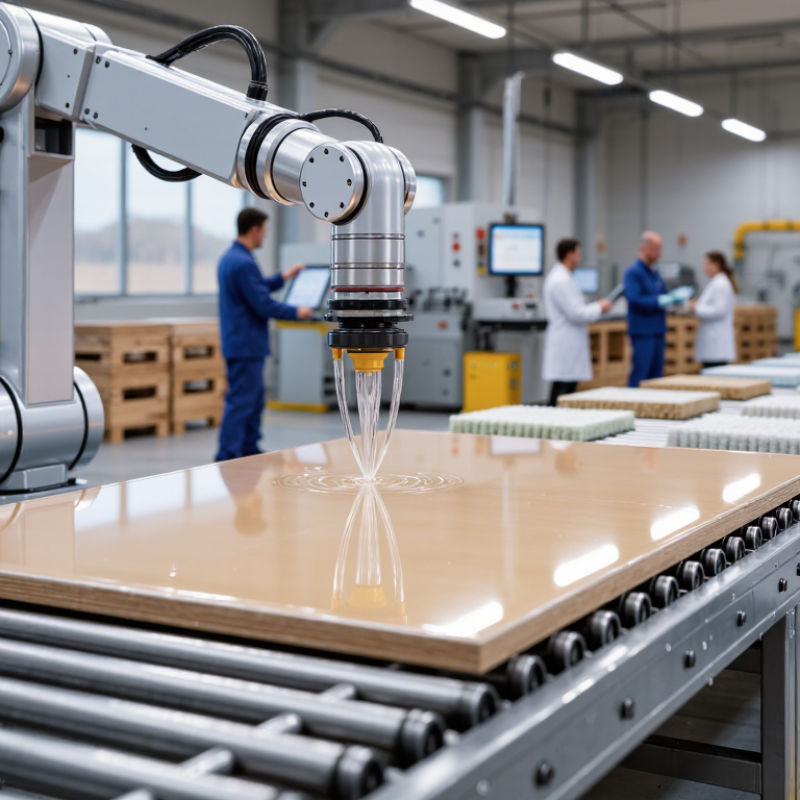
PUR adhesive is a polyurethane reactive adhesive that combines hot-melt processing with moisture curing. It is applied in a heated, liquid state. As it cools, it quickly holds the materials in place. Then, moisture from the air or substrates triggers a chemical reaction. The adhesive forms a stronger, crosslinked bond over time. This makes PUR suitable for panels, furniture components, textiles, packaging, and assembled products.
Its performance depends on real production conditions. Temperature, humidity, surface cleanliness, and application thickness all matter. In a dry factory, curing may slow noticeably. In a humid environment, the surface may cure faster than expected. Operators should test the open time and final strength on actual materials, not rely only on technical sheets. It is not magic. Poor alignment or contaminated surfaces can still cause failure.
Tips: Keep surfaces clean and dry. Control the adhesive temperature carefully. Use calibrated equipment. Record humidity during trials. Allow enough curing time before heavy handling. Small process changes can create surprisingly different results. That part deserves more attention.
Why PUR Adhesive Fits Global Manufacturing Requirements
PUR adhesive fits global manufacturing requirements because it supports strong, durable bonds across many production environments. Its moisture-curing chemistry performs well on wood, plastics, metals, and composite panels. After application, it forms a flexible bond that can tolerate vibration, temperature changes, and moderate moisture exposure. This matters when products travel between humid ports, dry warehouses, and cold distribution centers.
Manufacturers also value PUR adhesive for clean assembly lines. It can reduce mechanical fasteners and create smoother surfaces. Automated dispensing improves repeatability, but only when temperature, open time, and bead size are controlled. Technical teams should verify curing behavior for each substrate. One formula may work well in a warm factory but cure slowly in a dry region. That limitation deserves attention. PUR is not a universal fix.
Tips: Store containers under recommended conditions and record batch details. Test bonded samples after heat, humidity, and aging cycles. Check the technical data sheet before changing equipment settings. Use trained operators and suitable ventilation. Small process changes can affect bond strength. I have seen production teams focus on adhesive selection while overlooking surface cleanliness. Dust, oil, or excess release agent can weaken an otherwise excellent bond. Supplier documentation, internal trials, and measured quality checks create more reliable results across international plants.
Key Benefits of PUR Adhesive for Industrial Production
Why Choose PUR Adhesive for Global Manufacturing?
Key Benefits of PUR Adhesive for Industrial Production
PUR adhesive offers strong, durable bonding for demanding industrial production. It reacts with moisture and forms a resilient polymer network after application. This curing process helps join wood, plastics, metals, laminates, and composite materials. The adhesive also creates a thin, clean bond line. That matters on visible panels and precision components.
In production plants, PUR adhesive can support faster assembly and reliable automated dispensing. Many solvent-free formulations also help reduce workplace emissions, depending on the product design. Heat resistance and moisture resistance can protect bonded parts during transport and long-term use. Operators still need controlled temperature, accurate dosage, and clean surfaces. Small process errors can weaken the final bond.
PUR adhesive is not a universal fix. High humidity may shorten its open time and complicate handling. Poor storage can also affect viscosity and curing performance. Practical testing remains essential before full-scale production. Engineers should compare peel strength, shear strength, aging resistance, and cycle time under real conditions. A supplier’s technical data is useful, but factory trials reveal more. Uneven surfaces, dusty materials, or incorrect pressure may expose weaknesses that laboratory tests miss. This careful approach improves consistency across international manufacturing sites.
Safety, Quality Control, and Sustainability Considerations
Why Choose PUR Adhesive for Global Manufacturing?
Safety, Quality Control, and Sustainability Considerations
PUR adhesive can support global production, but it is not automatically safer or greener. Moisture-cured formulations often reduce solvent use. However, uncured products may contain reactive isocyanates. The European Chemicals Agency requires relevant professional training for products containing over 0.1% diisocyanates in the European Union. This makes ventilation, gloves, eye protection, and documented training essential. A clean dispensing nozzle and a dry storage area also matter. Small handling errors can affect worker safety and bond performance.
Quality depends on controlled conditions. Record batch numbers, adhesive temperature, viscosity, open time, and curing humidity. Test peel strength after full cure, not immediately after assembly. ISO’s 2022 Survey recorded more than 1.2 million ISO 9001 certificates worldwide. Certification does not guarantee every bond, but it supports repeatable procedures and traceability. Global plants should use the same inspection limits, while allowing for local climate differences. That point is often underestimated.
Tips: Store containers within the supplier’s stated temperature range. Check moisture exposure before use. Keep retain samples from each lot. Train operators with real production parts, not only slides. Review failed bonds honestly; the adhesive may not be the only cause. Sustainability also needs restraint. The OECD reported 353 million tonnes of plastic waste in 2019, with only 9% recycled. Design for repair, material separation, and lower adhesive consumption where practical. PUR can improve durability, yet disposal and recyclability may remain difficult.
Why Choose PUR Adhesive for Global Manufacturing?
Reactive PUR hot-melt adhesives are typically solvent-free and cure through a moisture-driven chemical reaction.
This supports lower process emissions and consistent bonding, while safe handling requires controlled exposure to
uncured isocyanate components, suitable ventilation, and appropriate personal protective equipment.
The chart summarizes generally applicable characteristics of reactive PUR hot-melt technology; exact performance depends on formulation, substrate, and process conditions.
 +86-15666836565
 CONTACT NUMBER