How to Choose the Right Water Based Adhesive for Your Needs?
Choosing the right water based adhesive can greatly impact your projects. With various options available, it’s essential to understand their unique features and applications. Water based adhesives are popular due to their low toxicity and environmental friendliness. They are versatile and widely used in crafts, woodworking, and construction.
When selecting a water based adhesive, consider factors like drying time and bonding strength. Some adhesives dry quickly, making them ideal for time-sensitive tasks. Others provide strong bonds that withstand stress and impact. It's also important to evaluate the surfaces you will be working with, as different materials require specific adhesive properties.
Navigating through the myriad of choices can be overwhelming. Each product claims to be the best, but your needs should guide your decision. Testing a small amount beforehand can reveal how well it performs. Reflect on past experiences to avoid common mistakes. This will help you apply the perfect water based adhesive for your specific needs.
Understanding the Basics of Water Based Adhesives
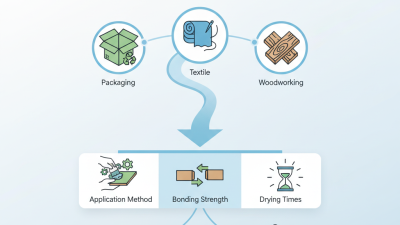
Water-based adhesives are increasingly popular in various industries, from packaging to woodworking. They are known for their eco-friendly properties and versatility. According to a report by MarketsandMarkets, the water-based adhesive market is expected to reach $12 billion by 2027, reflecting a growing trend towards sustainable solutions.
When selecting a water-based adhesive, consider the specific requirements of your project. The viscosity, drying time, and bonding strength are critical factors. A recent study highlighted that adhesives with lower VOC emissions are safer for both users and the environment. Always check technical data sheets for detailed performance characteristics and application methods.
Tip: Conduct a small test before committing to a full application. This ensures the adhesive meets your expectations in real-world conditions.
Choosing the right adhesive can be challenging. Not all formulas are created for every material. For instance, some adhesives work best on porous surfaces, while others are designed for non-porous applications. Expert recommendations suggest balancing performance and application ease to avoid future issues in adhesion.
Tip: Always keep the working environment in mind. Temperature and humidity can affect how well an adhesive bonds.
Evaluating Your Specific Adhesive Needs and Applications
Choosing the right water-based adhesive depends on your specific needs. Consider the materials you will bond. Different surfaces, like wood or fabric, require different adhesives. Temperature and humidity levels also affect adhesion. For instance, high humidity can weaken bonds in some adhesives.
Think about the application method. Some adhesives come in sprays, while others are liquid or gel. Your choice can influence precision and coverage. Pay attention to drying times, too. Some need rapid curing, while others allow for adjustments. Reflect on your project's demands carefully.
Don't overlook safety considerations. Water-based adhesives are often non-toxic. However, check for potential allergens or irritants. While many are user-friendly, practice is essential for best results. Experiment with small samples before committing to a larger project. Mistakes can happen, so learn from them.
Comparing Different Types of Water Based Adhesives
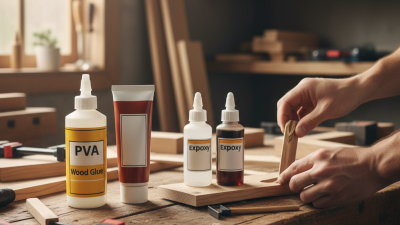
Water based adhesives are popular in various applications due to their eco-friendliness and ease of use. When comparing different types, it’s essential to recognize their unique properties. For instance, polyvinyl acetate (PVA) adhesives are versatile. They bond wood, paper, and fabric effectively. Research indicates that PVA accounts for approximately 30% of the adhesive market. This type dries clear and is non-toxic, making it suitable for crafts and children’s projects.
Another common type is acrylic water-based adhesive. These adhesives provide excellent bonding strength, especially in high-stress applications. Studies show that acrylic adhesives can withstand temperatures up to 80°C. This durability makes them suitable for industrial use. However, they can be more expensive and may require specific surface preparation.
Lastly, casein-based adhesives offer a natural alternative. These adhesives, derived from milk protein, are biodegradable. However, they may not perform well under high humidity conditions. The trade-offs highlight the importance of understanding the specific needs of each project. Finding the right adhesive involves evaluating bonding strength, drying time, and environmental resistance, aligning with one's requirements and constraints.
Factors to Consider When Selecting an Adhesive
Choosing the right water-based adhesive can enhance your projects significantly. Factors to consider include the materials you’re bonding, flexibility, and drying time. Each adhesive serves specific purposes, so understanding their properties is essential.
Consider your base materials. Different surfaces react differently to adhesives. Wood, fabric, and plastics may require distinct formulations. Test on small areas first to avoid mishaps.
Drying time matters, especially for larger tasks. Some adhesives set quickly while others remain workable longer. Be aware of your timeline to prevent rushing decisions.
Tips: Always keep your workspace clean. A tidy area can prevent contamination. Don’t overlook the packaging instructions. They often provide crucial information about optimal application. Each project is unique; be ready to adapt your choice as needed.
How to Choose the Right Water Based Adhesive for Your Needs? - Factors to Consider When Selecting an Adhesive
| Factor |
Description |
Applications |
Drying Time |
Strength |
| Viscosity |
Refers to the thickness of the adhesive; |
Wood, paper bonding |
Fast (10-30 minutes) |
Medium strength (1500-2500 psi) |
| pH Level |
Affects the adhesion quality and longevity; |
Paper, textiles |
Medium (1-2 hours) |
High strength (2500-3500 psi) |
| Temperature Resistance |
Enables use in various environmental conditions; |
Outdoor applications |
Slow (1-3 hours) |
Low to Medium strength (1000-2000 psi) |
| Cleanliness |
Surface to be bonded must be free of dust/oil; |
Crafts and hobbies |
Very Fast (5-10 minutes) |
Varies - typically lower (<1000 psi) |
| Solvent-Free |
Safety and environmental considerations; |
Child-friendly crafts |
Fast (1-15 min) |
Medium (1200-2200 psi) |
Testing and Ensuring Compatibility of Adhesives with Materials
Choosing the right water-based adhesive can be challenging. Compatibility with the materials you plan to bond is crucial. Testing different adhesives on sample materials is often necessary. According to industry reports, improper adhesive selection can lead to bond failures, costing businesses significantly.
When selecting an adhesive, consider factors such as moisture sensitivity and temperature resistance. A study by the Adhesive and Sealant Council reveals that nearly 30% of adhesion failures stem from material incompatibility. For example, some adhesives work well with porous surfaces but poorly with non-porous ones. Testing should include peel strength assessments and shear testing for a better understanding.
Conducting compatibility tests may require several iterations. Experimenting on various substrate combinations helps in discerning optimal adhesion properties. Sometimes, even leading solutions do not provide ideal results. If the adhesive fails during testing, reassess the materials and conditions used. It’s a learning process that leads to better choices in the long run.
 +86-15666836565

 CONTACT NUMBER