Top Uses of Urea Formaldehyde Adhesive in Modern Industries?
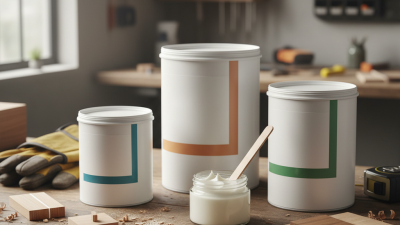
In modern industries, Urea Formaldehyde Adhesive plays a pivotal role. Its strong bonding capabilities make it a favorite in various applications. This adhesive finds use in woodworking, laminates, and even textiles. Its versatility stems from its excellent adhesion properties and ease of use.
However, not all applications yield the same results. The effectiveness of Urea Formaldehyde Adhesive can vary based on conditions like temperature and humidity. Manufacturers must consider these factors to ensure optimal performance. Despite its benefits, some concerns exist about the adhesive's environmental impact. It’s essential to weigh the advantages against potential drawbacks.
A deeper understanding of Urea Formaldehyde Adhesive is crucial for industries aiming to enhance their production processes. Industry professionals must stay informed about innovations and best practices. This ensures they can make informed decisions while also addressing sustainability challenges. The landscape of adhesive technology continues to evolve, presenting both opportunities and challenges.
Applications of Urea Formaldehyde Adhesive in Wood Products Manufacturing
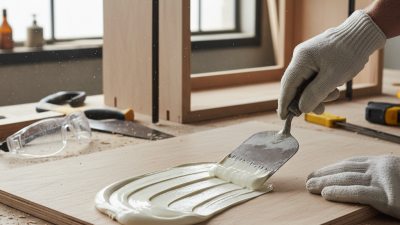
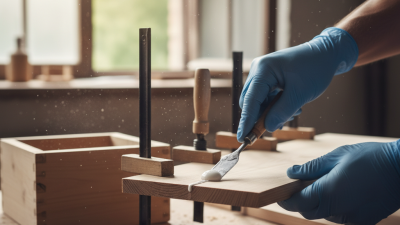
Urea formaldehyde adhesive plays a pivotal role in wood products manufacturing. Its strength and durability make it a preferred choice in various applications. According to a report by the Wood Products Safety Council, urea formaldehyde is widely used in particleboard, plywood, and medium-density fiberboard (MDF). These products are essential for furniture and cabinetry production. The use of this adhesive enhances the structural integrity of wood products, facilitating better performance.
In construction, urea formaldehyde adhesive has gained traction in creating engineered wood. A study by the National Wood Flooring Association indicates that these engineered materials often outperform traditional solid wood in terms of stability. They are less prone to warping and cracking, offering long-lasting solutions for builders. Industrial wood laminating processes also rely heavily on urea formaldehyde due to its fast curing time, which boosts productivity.
Tips: Always consider environmental factors when using urea formaldehyde adhesive. Proper ventilation is essential during application to reduce exposure. Regularly assess product performance, as over time, adhesive bonds can weaken. This knowledge encourages better practices in manufacturing to ensure longevity and quality.
Role of Urea Formaldehyde Adhesive in Construction and Building Materials
Urea formaldehyde adhesive plays a crucial role in construction and building materials. This adhesive is widely used in the production of plywood, particleboard, and other engineered wood products. According to industry reports, its market is expected to reach 13.5 million tons by 2025. Its strength and durability make it a preferred choice for manufacturers.
Using urea formaldehyde in these materials provides effective bonding with high resistance to moisture and temperature variations. Furthermore, the cost-effectiveness of this adhesive compared to others enhances its appeal in large-scale applications. However, there are concerns regarding formaldehyde emissions, which can impact indoor air quality. It's essential to use low-emission products where possible.
Tips: When selecting adhesives, consider the environmental impact. Look for alternatives with lower VOC levels. Regularly check local regulations to ensure compliance.
Many construction professionals recognize the importance of safe adhesives. Yet, some still overlook the health implications associated with higher emission levels. Increased awareness can lead to better choices in material selection. Ensuring a balance between quality and safety remains a challenge.
Top Uses of Urea Formaldehyde Adhesive in Modern Industries
| Application Area |
Description |
Advantages |
| Wood Products |
Used in laminating and bonding wood panels. |
High strength, cost-effective, and good moisture resistance. |
| Construction Industry |
Used in wall panels and flooring systems. |
Durability and consistent bonding performance. |
| Furniture Manufacturing |
Applied in the assembly of wooden furniture. |
Provides a smooth finish and reduces noise during assembly. |
| Particle Board Production |
Used as a binding agent in particle board manufacturing. |
Enhances structural integrity and overall board strength. |
| Insulation Materials |
Utilized in the bonding of insulation boards. |
Improves thermal efficiency and reduces air leaks. |
Urea Formaldehyde Adhesive in the Production of Particleboard and Plywood
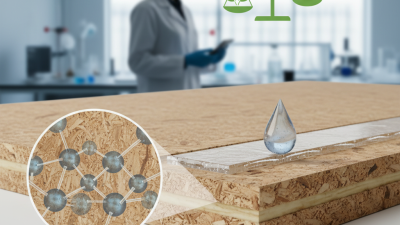
Urea formaldehyde adhesive plays a critical role in the production of particleboard and plywood. This synthetic resin is known for its strong bonding capabilities. It is widely used in the manufacturing process, providing durability and strength to composite wood products. The adhesive bonds wood particles effectively, enhancing the structural integrity of the final product.
In particleboard production, the adhesive is mixed with wood shavings and chips. This mixture is then pressed under heat and pressure, forming a solid board. The urea formaldehyde adhesive allows for a smooth surface finish. However, the use of this adhesive raises concerns about formaldehyde emissions. While it has excellent bonding properties, the volatile organic compounds (VOCs) released can be harmful. It’s essential for manufacturers to consider environmentally friendly alternatives without sacrificing quality.
For plywood, the adhesive not only binds layers of veneer but also ensures resistance to moisture. The process involves applying the adhesive between sheets of wood, which are then pressed. Although effective, this method also poses challenges. End-users are more aware of health issues related to adhesive use. There is a growing demand for lower-emission products. Companies must balance performance with safety and sustainability.
Innovative Uses of Urea Formaldehyde Adhesive in Automotive Components
Urea formaldehyde adhesive has gained traction in various industries,
especially in automotive manufacturing. This adhesive offers
strong bonds and durability, essential for vehicle components. Its unique properties
make it suitable for applications where high strength and heat resistance are crucial. For instance, it is often
used in assembling dashboard components and interior panels.
In the automotive sector, the ability of urea formaldehyde adhesive to withstand harsh environmental
conditions is impressive. It contributes both to structural integrity and
aesthetic appeal. Many manufacturers turn to this adhesive for bonding wood-based materials
in car interiors. While it performs well, some concerns exist regarding its longevity under extreme conditions.
Evaluating these factors is vital to ensure optimal performance
over time.
Another interesting application is in soundproofing materials. Here, the adhesive enhances
acoustic insulation, promoting a quieter ride. However, it’s important to
assess its long-term effectiveness. Users often report variable performance with prolonged exposure to moisture.
Such feedback encourages continuous improvement and research in formulation. Balancing reliability
and innovation remains a challenge for manufacturers in this field.
Environmental Considerations and Safety of Urea Formaldehyde Adhesive Usage
Urea formaldehyde adhesive is widely used in construction and furniture manufacturing. However, its environmental impact raises concerns. This adhesive can emit formaldehyde gas, which is harmful to health. Prolonged exposure may cause respiratory issues and irritation. Proper ventilation is essential during application and curing.
Manufacturers are working to reduce emissions. Some have developed low-emission formulations. Yet, many still contend with the traditional variants that are widely available. Safety protocols should be strictly followed to minimize risks. Choosing eco-friendly alternatives is a growing trend. Industry professionals are urged to seek safer options whenever possible. While urea formaldehyde remains a staple, awareness of its hazards is crucial for safe use.
 +86-15666836565
 CONTACT NUMBER